Tours of Scotland
Majestic Highlands & Beyond
Experience the breathtaking beauty of Scotland with our tailored tours. From the majestic Highlands to the historic castles, discover Scotland's rich heritage and stunning landscapes.
Scotland Tour Packages
How Would You Like to Explore Scotland?
Must-Visit Regions in Scotland
 Featured
Edinburgh
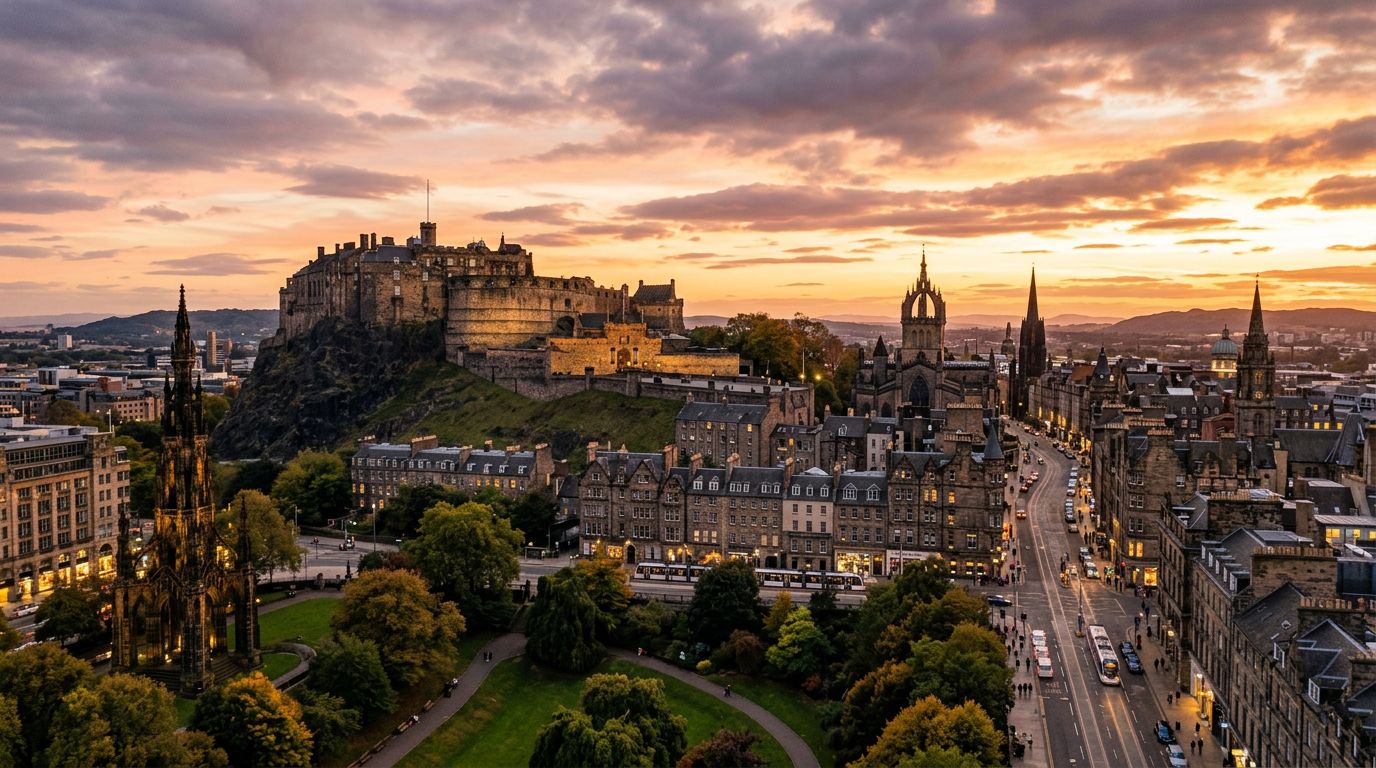
Edinburgh is a city built on geology and shaped by history. The Old Town rises along a volcanic ridge from the Castle at the summit to Holyrood at its base, its medieval tenements, narrow closes, and hidden courtyards largely unchanged in outline since the 16th century. The New Town, by contrast, is a masterpiece of Georgian urban planning — broad streets, elegant crescents, and classical facades laid out in the 1760s. Together they form a UNESCO World Heritage Site. Edinburgh Castle dominates the skyline from the top of Castle Rock, an extinct volcanic plug. Inside you will find the Honours of Scotland — the oldest crown jewels in Britain — the Stone of Destiny, St Margaret's Chapel (the city's oldest building), the medieval siege cannon Mons Meg, and the National War Museum. The One o'Clock Gun has been fired daily (excepting Sundays) since 1861. It is Scotland's most-visited paid attraction, drawing over two million visitors annually. The Royal Mile stretches 1.1 miles from the Castle Esplanade down to the Palace of Holyroodhouse, the official Scottish residence of the British monarch. Along the way, St Giles' Cathedral — with its 1500 crown steeple and the exquisite Thistle Chapel — stands at the heart of the High Street. The Scottish Parliament, designed by Enric Miralles and opened in 2004, offers free public tours. Camera Obscura, the Scotch Whisky Experience, the Real Mary King's Close, and John Knox's House (dating to 1470) all line the route. Beyond the Mile, Arthur's Seat — the main peak of an extinct volcano in Holyrood Park — rises 251 metres and rewards a moderate 45-minute climb with panoramic views of the city, the Firth of Forth, and the Pentland Hills. Calton Hill offers a shorter climb and equally spectacular views, with the National Monument and the Nelson Monument at its summit. The National Museum of Scotland and the Scottish National Gallery are both free to enter and world-class in scope.
 Featured
Glasgow
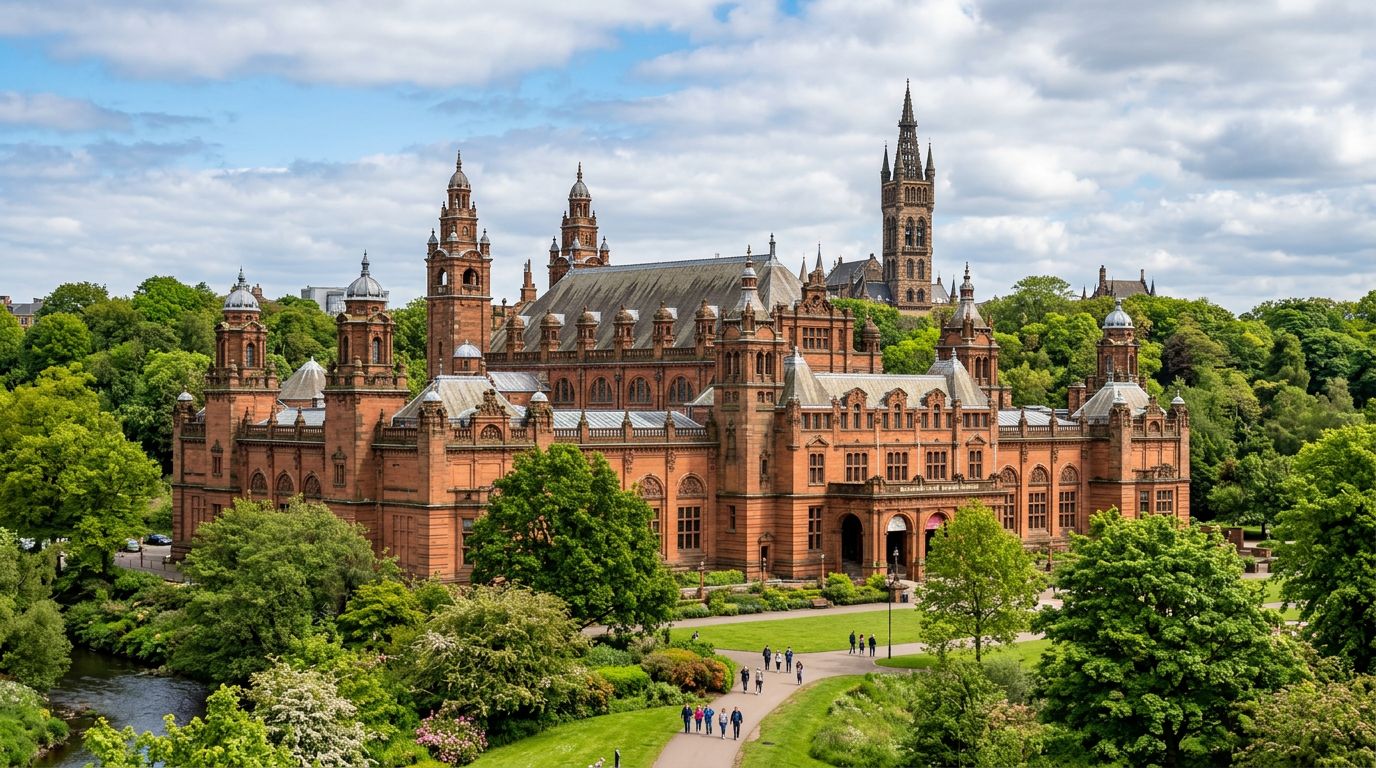
Glasgow is Scotland's largest city and its cultural engine. Where Edinburgh trades on medieval grandeur, Glasgow's personality is built on industry, reinvention, and a creative energy that has made it one of Europe's most rewarding city breaks. Most of its world-class museums are free, its music scene rivals any city its size, and its Victorian and Art Nouveau architecture is genuinely outstanding. Kelvingrove Art Gallery and Museum is Glasgow's crown jewel and one of the most visited free museums in the United Kingdom. Housed in a red sandstone Baroque Revival building in the city's West End, it holds over 8,000 objects across 22 themed galleries. Highlights include Salvador Dali's Christ of Saint John of the Cross, a Spitfire suspended from the ceiling, Scottish Colourist paintings, and collections spanning ancient Egypt to the natural world. Entry is free. The Riverside Museum, designed by the late Zaha Hadid and winner of the European Museum of the Year Award, sits on the north bank of the Clyde. Its zinc-clad zigzag roof houses over 3,000 objects telling the story of transport by land, sea, and air — from vintage trams and locomotives to a recreated 1930s Glasgow street. Moored outside is the Glenlee, one of only five Clyde-built sailing ships still afloat. Both museum and tall ship are free. Glasgow Cathedral is the only medieval Scottish mainland cathedral to have survived the Reformation intact. Behind it, the Glasgow Necropolis — a Victorian cemetery on a hill — offers atmospheric walks and city views. George Square showcases Victorian civic grandeur. The Burrell Collection in Pollok Country Park reopened in 2022 after a major refurbishment, housing Sir William Burrell's extraordinary collection of art and antiquities. Entry is free. Charles Rennie Mackintosh left his mark across Glasgow — the Lighthouse (Scotland's Centre for Design and Architecture), the Mackintosh at the Willow tearoom on Sauchiehall Street, and House for an Art Lover in Bellahouston Park. The Glasgow Mural Trail covers over 30 large-scale street art works across the city centre.
 Featured
Scottish Highlands
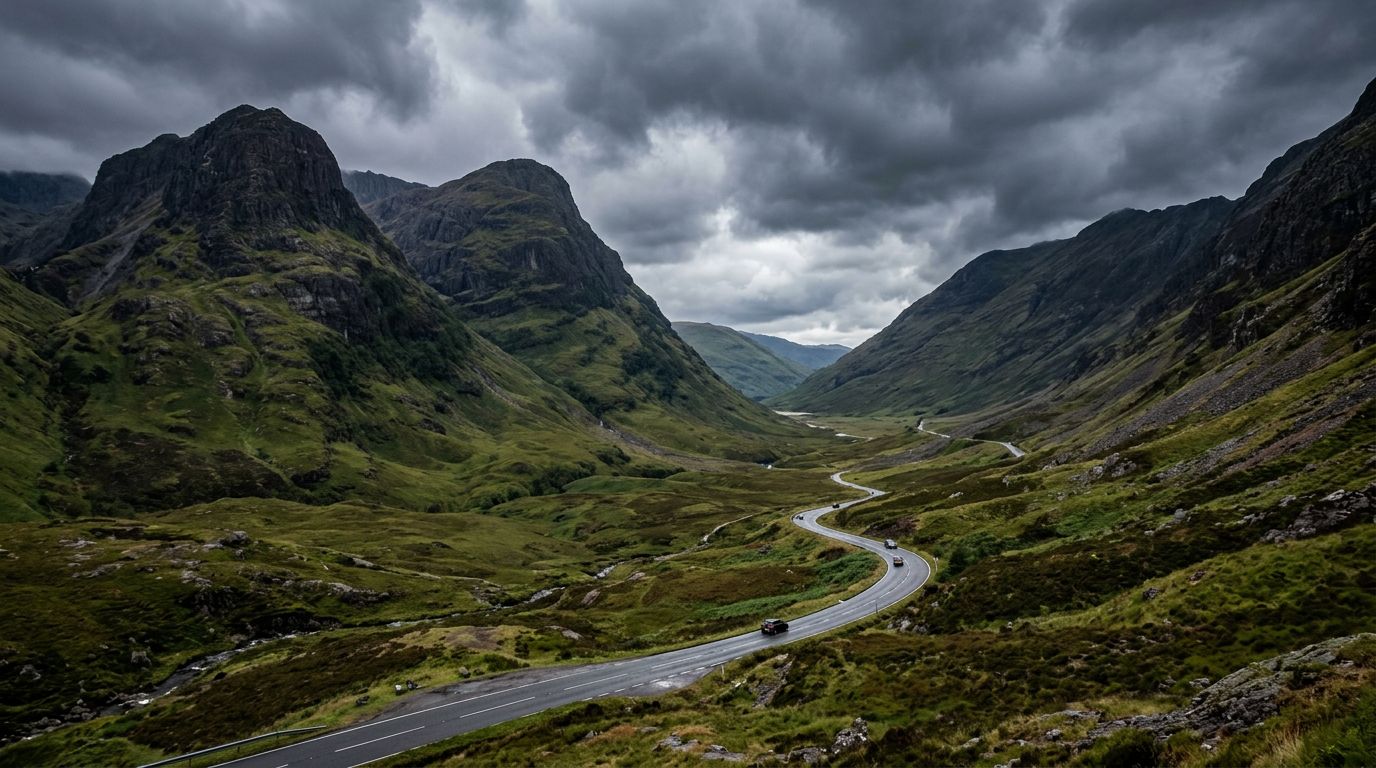
The Scottish Highlands are a landscape on a scale that exists nowhere else in Britain. Vast glens carved by glaciers, mountains rising above 1,000 metres, sea lochs penetrating deep inland, and a human history of clan warfare, Jacobite risings, and the Highland Clearances — all set against some of the most dramatic scenery in Europe. Glen Coe is arguably Scotland's most dramatic valley. The A82 road cuts through a narrow pass flanked by towering volcanic peaks — the Three Sisters on the south side, Buachaille Etive Mor guarding the eastern entrance. This was the site of the 1692 Massacre of Glencoe, when government soldiers killed 38 members of the MacDonald clan in violation of the laws of hospitality. The National Trust for Scotland visitor centre tells the story with restraint and the surrounding walks range from gentle glen paths to serious mountain routes. Ben Nevis, at 1,345 metres (4,413 feet), is the highest mountain in the British Isles. It rises above Fort William — self-styled Outdoor Capital of the UK — and the main Pony Track is a serious 17-kilometre round trip taking 7 to 10 hours. The approach through Glen Nevis is spectacular even without attempting the summit. Eilean Donan Castle sits on a small tidal island where three sea lochs meet — Loch Duich, Loch Long, and Loch Alsh. It is the most photographed castle in Scotland, connected to the mainland by a stone bridge. The current building is a 20th-century reconstruction of the medieval original, destroyed in 1719 during a Jacobite rising, but it photographs beautifully and the interior is well-presented. Entry is approximately £13. The Glenfinnan Viaduct — famous from the Harry Potter films as the route of the Hogwarts Express — carries the West Highland Railway across 21 arches. The Jacobite Steam Train crosses from April to October; book at least 60 days in advance. The Glenfinnan Monument at the head of Loch Shiel marks where Bonnie Prince Charlie raised his standard in 1745.
 Featured
Isle of Skye
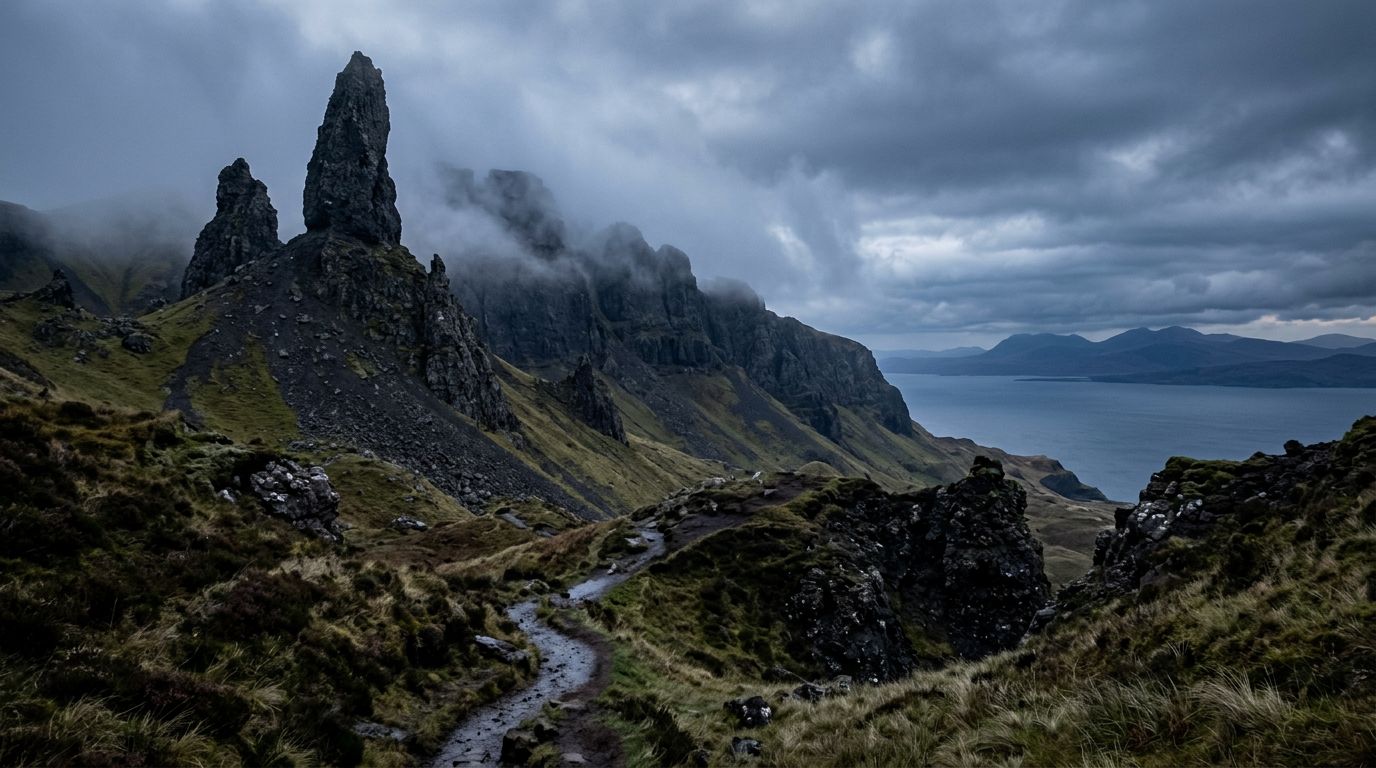
The Isle of Skye is the largest of Scotland's Inner Hebrides and one of the most visually dramatic places in Europe. Connected to the mainland by the Skye Bridge at Kyle of Lochalsh (toll-free since 2004), the island combines volcanic geology, medieval clan history, and landscapes so otherworldly they have served as backdrops for films, album covers, and countless photographs. The Fairy Pools in Glenbrittle sit at the foot of the Black Cuillin mountains. A series of crystal-clear pools and waterfalls connected by a well-maintained 2.4-kilometre path, they glow blue and green in good light. The water is cold year-round — wild swimming is popular but a wetsuit is advisable. The car park charges £5 and fills early in summer; arrive before 9am. The Old Man of Storr is the most iconic image of Skye. This dramatic basalt pinnacle rises to 719 metres on the Trotternish Peninsula, north of Portree. The hike from the car park is 4.5 kilometres return, taking 1.5 to 2 hours, with steep sections and muddy ground. The surrounding landscape of jagged spires and rocky outcrops looks almost alien, especially when wrapped in mist. The Quiraing, also on the Trotternish Peninsula, is an extraordinary landslip landscape of grassy plateaux, rock pinnacles, and hidden hollows. The circular walk takes 2 to 3 hours. Dunvegan Castle, seat of Clan MacLeod for over 800 years, has walled gardens and boat trips to a nearby seal colony. The Talisker Distillery at Carbost is the only distillery on Skye producing single malt whisky since 1830. Portree is the island's main settlement — a harbour front lined with brightly painted houses in shades of red, yellow, and blue. It has the best selection of restaurants, shops, and accommodation on Skye and is the most practical base for exploring the island.
 Featured
Inverness
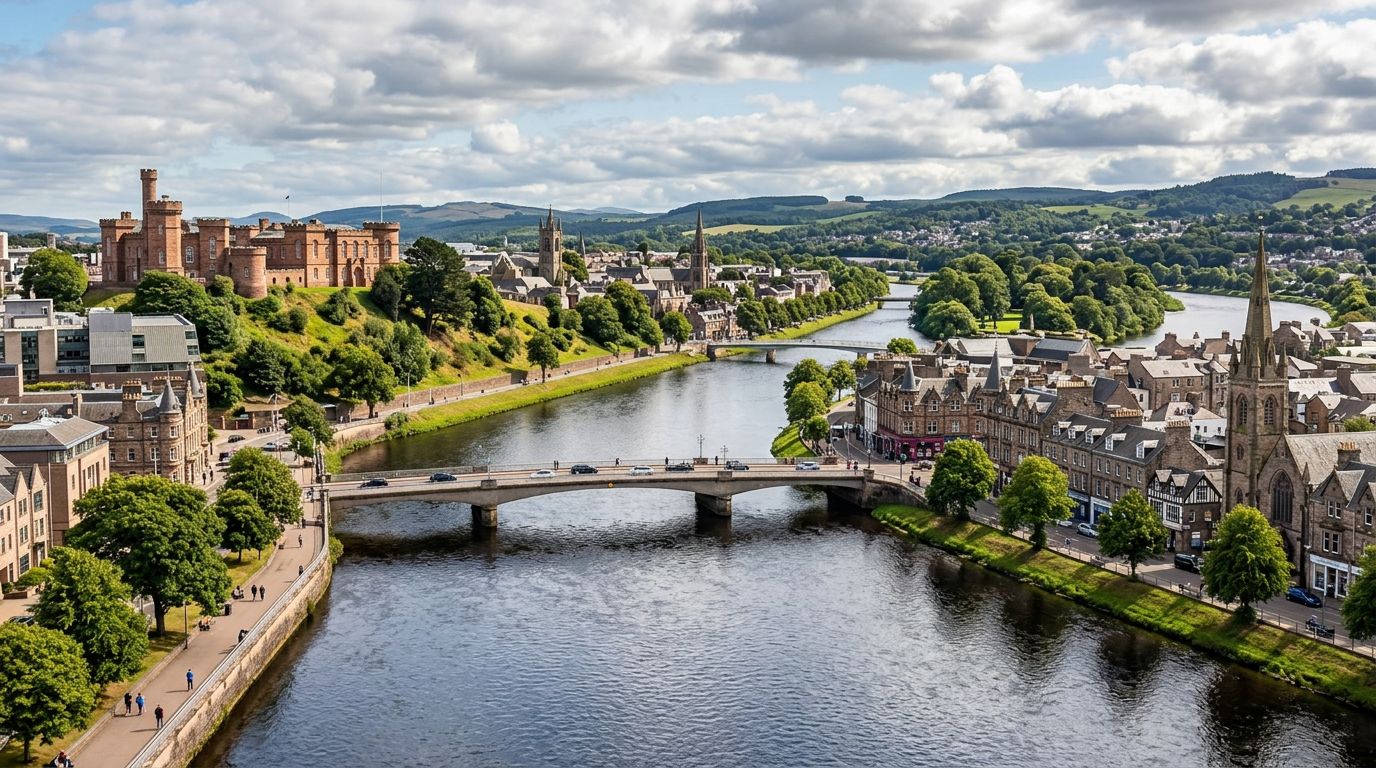
Inverness is the capital of the Scottish Highlands and the natural base for exploring the north of Scotland. Compact, walkable, and set where the River Ness flows into the Moray Firth, it combines city comforts with immediate access to some of Scotland's most significant historical sites and finest landscapes. The Inverness Castle Experience is the city's newest major attraction, opened in 2026 following a £47 million transformation. Located above the River Ness in the heart of the city, the restored castle offers an immersive introduction to Highland history, culture, and landscapes. It is the natural starting point for any visit to Inverness. The Victorian Market, dating to 1890, occupies the city centre with over 30 independent businesses under an ornate cast-iron and wooden domed roof. The Market Hall, Market Arcade, and Queensgate Arcade host food producers, craft shops, and Highland specialists. A walk along the River Ness leads to the Ness Islands — a peaceful chain of wooded islands connected by Victorian footbridges, perfect for a morning stroll. Culloden Battlefield lies 6 miles east of the city. On 16 April 1746, the last pitched battle on British soil was fought here — the Jacobite defeat ended the Stuart claim to the throne and changed Highland culture forever. The National Trust for Scotland visitor centre tells the story with moving displays, and an audio-guided walk across the moor locates the clan positions. Nearby, the Clava Cairns are a Bronze Age cemetery over 4,000 years old — standing stones and burial cairns in a beautiful wooded setting, thought to have inspired Craigh na Dun in the Outlander series. Chanonry Point on the Black Isle, a 30-minute drive from Inverness, is one of the best places in Europe to see bottlenose dolphins from the shore. Inverness is also the starting and finishing point for the North Coast 500.
 Featured
Loch Ness
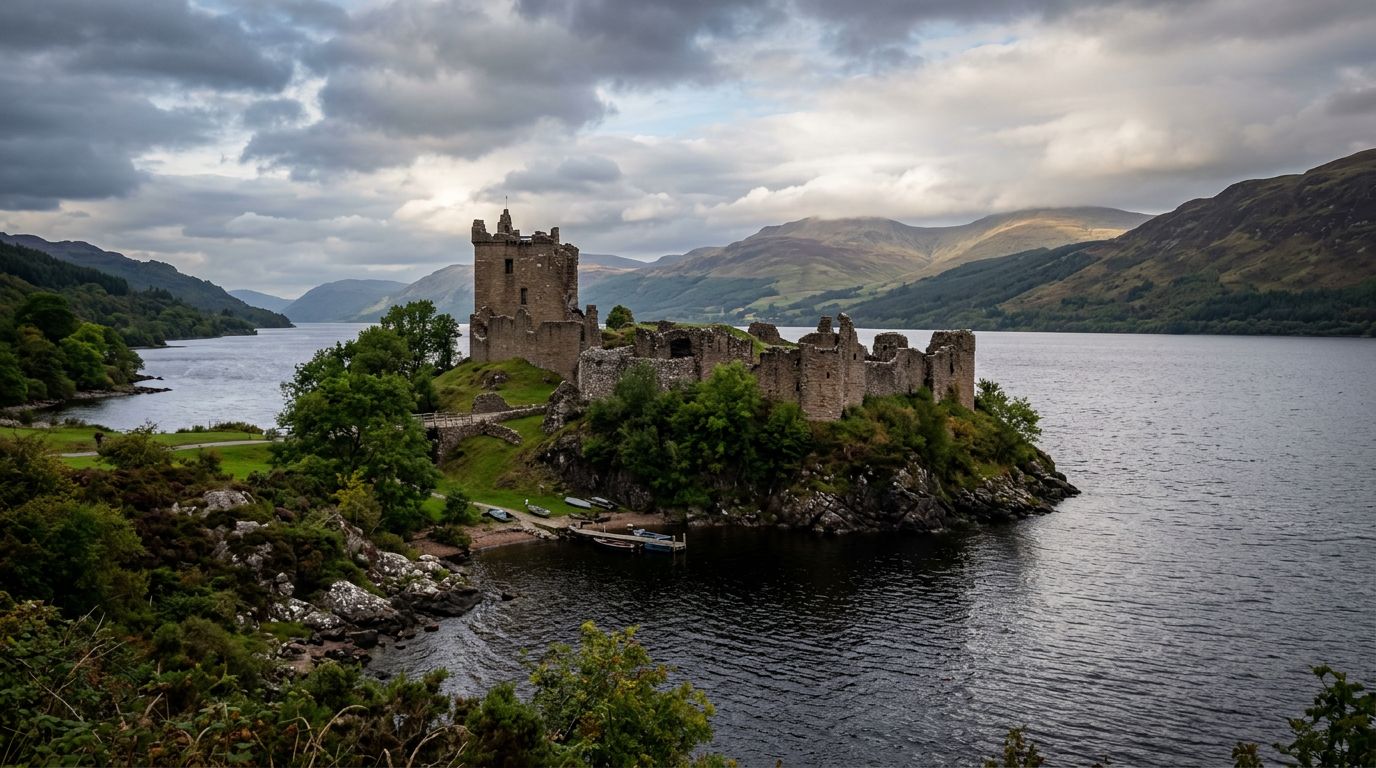
Loch Ness needs no introduction, but it deserves more than its monster. This is Scotland's most famous body of water — 23 miles long, up to 755 feet deep (deeper than the North Sea), and holding more fresh water than all the lakes of England and Wales combined. The loch sits in the Great Glen, a geological fault line that cuts Scotland in two from Fort William to Inverness. Urquhart Castle is the postcard image of Loch Ness. This medieval fortress ruin sits on a rocky promontory on the western shore, near the village of Drumnadrochit. Once one of Scotland's largest castles, it saw centuries of conflict between Scots and English during the Wars of Independence, and was finally blown up by retreating government troops during the Jacobite Risings. The Grant Tower survives almost intact and offers panoramic views up and down the loch. Entry is £14 online (£16 walk-up), managed by Historic Environment Scotland. Drumnadrochit is the hub for Loch Ness tourism. The Loch Ness Centre (£17) presents the history of the monster legend with scientific rigour. Several operators run boat cruises from Drumnadrochit and nearby piers — many equipped with sonar so you can watch the loch bed scroll past on screen. Fort Augustus sits at the southern end of the loch, where the Caledonian Canal meets the water through a dramatic flight of locks. Watching boats rise and fall through the locks is a relaxing spectacle, and the village has good cafes and a pleasant canal towpath walk. Inverness, at the northern end, is the Highland capital — a compact city with a Victorian castle overlooking the River Ness, a covered Victorian market, and a strong food scene. Culloden Battlefield, where the last pitched battle on British soil was fought in 1746, is 6 miles east of the city. The Jacobite defeat at Culloden ended the Stuart claim to the throne and changed Highland culture forever.
All Scotland Destinations
From historic cities to remote islands, explore every corner of Scotland
FeaturedEdinburgh
Edinburgh is a city built on geology and shaped by history. The Old Town rises along a volcanic ridge from the Castle at the summit to Holyrood at its base, its medieval tenements, narrow closes, and hidden courtyards largely unchanged in outline since the 16th century. The New Town, by contrast, is a masterpiece of Georgian urban planning — broad streets, elegant crescents, and classical facades laid out in the 1760s. Together they form a UNESCO World Heritage Site. Edinburgh Castle dominates the skyline from the top of Castle Rock, an extinct volcanic plug. Inside you will find the Honours of Scotland — the oldest crown jewels in Britain — the Stone of Destiny, St Margaret's Chapel (the city's oldest building), the medieval siege cannon Mons Meg, and the National War Museum. The One o'Clock Gun has been fired daily (excepting Sundays) since 1861. It is Scotland's most-visited paid attraction, drawing over two million visitors annually. The Royal Mile stretches 1.1 miles from the Castle Esplanade down to the Palace of Holyroodhouse, the official Scottish residence of the British monarch. Along the way, St Giles' Cathedral — with its 1500 crown steeple and the exquisite Thistle Chapel — stands at the heart of the High Street. The Scottish Parliament, designed by Enric Miralles and opened in 2004, offers free public tours. Camera Obscura, the Scotch Whisky Experience, the Real Mary King's Close, and John Knox's House (dating to 1470) all line the route. Beyond the Mile, Arthur's Seat — the main peak of an extinct volcano in Holyrood Park — rises 251 metres and rewards a moderate 45-minute climb with panoramic views of the city, the Firth of Forth, and the Pentland Hills. Calton Hill offers a shorter climb and equally spectacular views, with the National Monument and the Nelson Monument at its summit. The National Museum of Scotland and the Scottish National Gallery are both free to enter and world-class in scope.
FeaturedGlasgow
Glasgow is Scotland's largest city and its cultural engine. Where Edinburgh trades on medieval grandeur, Glasgow's personality is built on industry, reinvention, and a creative energy that has made it one of Europe's most rewarding city breaks. Most of its world-class museums are free, its music scene rivals any city its size, and its Victorian and Art Nouveau architecture is genuinely outstanding. Kelvingrove Art Gallery and Museum is Glasgow's crown jewel and one of the most visited free museums in the United Kingdom. Housed in a red sandstone Baroque Revival building in the city's West End, it holds over 8,000 objects across 22 themed galleries. Highlights include Salvador Dali's Christ of Saint John of the Cross, a Spitfire suspended from the ceiling, Scottish Colourist paintings, and collections spanning ancient Egypt to the natural world. Entry is free. The Riverside Museum, designed by the late Zaha Hadid and winner of the European Museum of the Year Award, sits on the north bank of the Clyde. Its zinc-clad zigzag roof houses over 3,000 objects telling the story of transport by land, sea, and air — from vintage trams and locomotives to a recreated 1930s Glasgow street. Moored outside is the Glenlee, one of only five Clyde-built sailing ships still afloat. Both museum and tall ship are free. Glasgow Cathedral is the only medieval Scottish mainland cathedral to have survived the Reformation intact. Behind it, the Glasgow Necropolis — a Victorian cemetery on a hill — offers atmospheric walks and city views. George Square showcases Victorian civic grandeur. The Burrell Collection in Pollok Country Park reopened in 2022 after a major refurbishment, housing Sir William Burrell's extraordinary collection of art and antiquities. Entry is free. Charles Rennie Mackintosh left his mark across Glasgow — the Lighthouse (Scotland's Centre for Design and Architecture), the Mackintosh at the Willow tearoom on Sauchiehall Street, and House for an Art Lover in Bellahouston Park. The Glasgow Mural Trail covers over 30 large-scale street art works across the city centre.
FeaturedScottish Highlands
The Scottish Highlands are a landscape on a scale that exists nowhere else in Britain. Vast glens carved by glaciers, mountains rising above 1,000 metres, sea lochs penetrating deep inland, and a human history of clan warfare, Jacobite risings, and the Highland Clearances — all set against some of the most dramatic scenery in Europe. Glen Coe is arguably Scotland's most dramatic valley. The A82 road cuts through a narrow pass flanked by towering volcanic peaks — the Three Sisters on the south side, Buachaille Etive Mor guarding the eastern entrance. This was the site of the 1692 Massacre of Glencoe, when government soldiers killed 38 members of the MacDonald clan in violation of the laws of hospitality. The National Trust for Scotland visitor centre tells the story with restraint and the surrounding walks range from gentle glen paths to serious mountain routes. Ben Nevis, at 1,345 metres (4,413 feet), is the highest mountain in the British Isles. It rises above Fort William — self-styled Outdoor Capital of the UK — and the main Pony Track is a serious 17-kilometre round trip taking 7 to 10 hours. The approach through Glen Nevis is spectacular even without attempting the summit. Eilean Donan Castle sits on a small tidal island where three sea lochs meet — Loch Duich, Loch Long, and Loch Alsh. It is the most photographed castle in Scotland, connected to the mainland by a stone bridge. The current building is a 20th-century reconstruction of the medieval original, destroyed in 1719 during a Jacobite rising, but it photographs beautifully and the interior is well-presented. Entry is approximately £13. The Glenfinnan Viaduct — famous from the Harry Potter films as the route of the Hogwarts Express — carries the West Highland Railway across 21 arches. The Jacobite Steam Train crosses from April to October; book at least 60 days in advance. The Glenfinnan Monument at the head of Loch Shiel marks where Bonnie Prince Charlie raised his standard in 1745.
FeaturedIsle of Skye
The Isle of Skye is the largest of Scotland's Inner Hebrides and one of the most visually dramatic places in Europe. Connected to the mainland by the Skye Bridge at Kyle of Lochalsh (toll-free since 2004), the island combines volcanic geology, medieval clan history, and landscapes so otherworldly they have served as backdrops for films, album covers, and countless photographs. The Fairy Pools in Glenbrittle sit at the foot of the Black Cuillin mountains. A series of crystal-clear pools and waterfalls connected by a well-maintained 2.4-kilometre path, they glow blue and green in good light. The water is cold year-round — wild swimming is popular but a wetsuit is advisable. The car park charges £5 and fills early in summer; arrive before 9am. The Old Man of Storr is the most iconic image of Skye. This dramatic basalt pinnacle rises to 719 metres on the Trotternish Peninsula, north of Portree. The hike from the car park is 4.5 kilometres return, taking 1.5 to 2 hours, with steep sections and muddy ground. The surrounding landscape of jagged spires and rocky outcrops looks almost alien, especially when wrapped in mist. The Quiraing, also on the Trotternish Peninsula, is an extraordinary landslip landscape of grassy plateaux, rock pinnacles, and hidden hollows. The circular walk takes 2 to 3 hours. Dunvegan Castle, seat of Clan MacLeod for over 800 years, has walled gardens and boat trips to a nearby seal colony. The Talisker Distillery at Carbost is the only distillery on Skye producing single malt whisky since 1830. Portree is the island's main settlement — a harbour front lined with brightly painted houses in shades of red, yellow, and blue. It has the best selection of restaurants, shops, and accommodation on Skye and is the most practical base for exploring the island.
FeaturedInverness
Inverness is the capital of the Scottish Highlands and the natural base for exploring the north of Scotland. Compact, walkable, and set where the River Ness flows into the Moray Firth, it combines city comforts with immediate access to some of Scotland's most significant historical sites and finest landscapes. The Inverness Castle Experience is the city's newest major attraction, opened in 2026 following a £47 million transformation. Located above the River Ness in the heart of the city, the restored castle offers an immersive introduction to Highland history, culture, and landscapes. It is the natural starting point for any visit to Inverness. The Victorian Market, dating to 1890, occupies the city centre with over 30 independent businesses under an ornate cast-iron and wooden domed roof. The Market Hall, Market Arcade, and Queensgate Arcade host food producers, craft shops, and Highland specialists. A walk along the River Ness leads to the Ness Islands — a peaceful chain of wooded islands connected by Victorian footbridges, perfect for a morning stroll. Culloden Battlefield lies 6 miles east of the city. On 16 April 1746, the last pitched battle on British soil was fought here — the Jacobite defeat ended the Stuart claim to the throne and changed Highland culture forever. The National Trust for Scotland visitor centre tells the story with moving displays, and an audio-guided walk across the moor locates the clan positions. Nearby, the Clava Cairns are a Bronze Age cemetery over 4,000 years old — standing stones and burial cairns in a beautiful wooded setting, thought to have inspired Craigh na Dun in the Outlander series. Chanonry Point on the Black Isle, a 30-minute drive from Inverness, is one of the best places in Europe to see bottlenose dolphins from the shore. Inverness is also the starting and finishing point for the North Coast 500.
Aberdeen
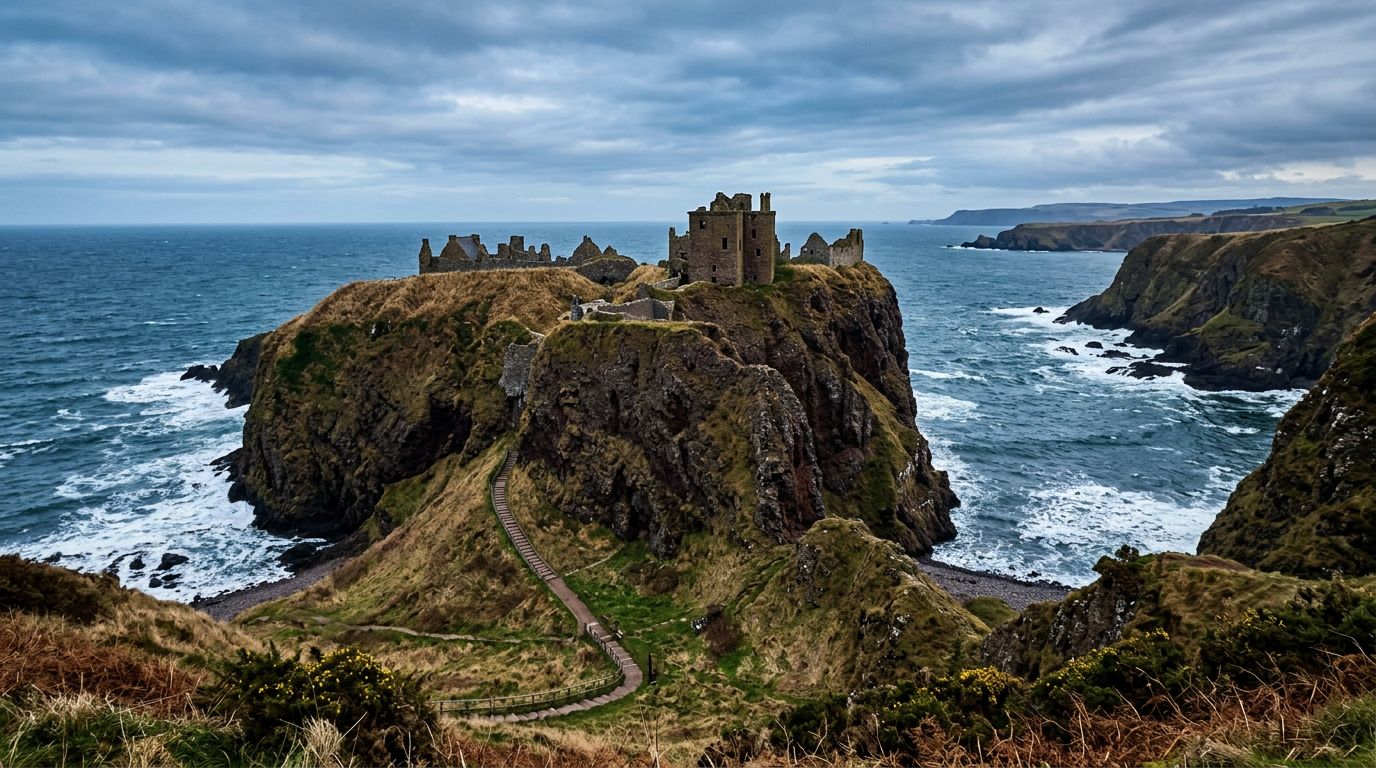
Aberdeen is Scotland's third-largest city, built almost entirely from locally quarried silver-grey granite that sparkles in the sunshine — earning it the enduring nickname the Granite City. Sitting on the northeast coast between the mouths of the rivers Dee and Don, it combines urban sophistication with dramatic coastal scenery and easy access to some of Scotland's finest castles, whisky, and countryside. The city centre's granite architecture is striking — Marischal College on Broad Street is one of the world's largest granite buildings. Union Street, the main thoroughfare, is lined with granite facades. Aberdeen Art Gallery houses one of the largest collections in Scotland, with a modern renovation that added a rooftop with panoramic city views. The Maritime Museum, housed partly in a historic provost's house, tells the story of Aberdeen's centuries-long relationship with the North Sea — from fishing to oil and gas. A ship-shaped glass gallery gives dramatic harbour views. Old Aberdeen, the medieval university quarter around King's College (founded 1495) and St Machar's Cathedral, feels like a separate village with cobbled streets and ancient buildings. Fittie, the former fishing village at the southern end of Aberdeen Beach, features granite cottages and quirky decorations. The beach itself is a long sweep of sand with dolphins regularly spotted offshore — Aberdeen is one of the best places in the UK for coastal dolphin watching. Dunnottar Castle, 15 miles south near Stonehaven, is the region's must-see day trip. This dramatic clifftop ruin played a central role in Scottish history and is one of the most photographed castles in the country. The surrounding Aberdeenshire Castle Trail connects 19 castles across the region. Royal Deeside, leading to Balmoral Castle (the Royal Family's Scottish residence), is 45 minutes west.
Dundee
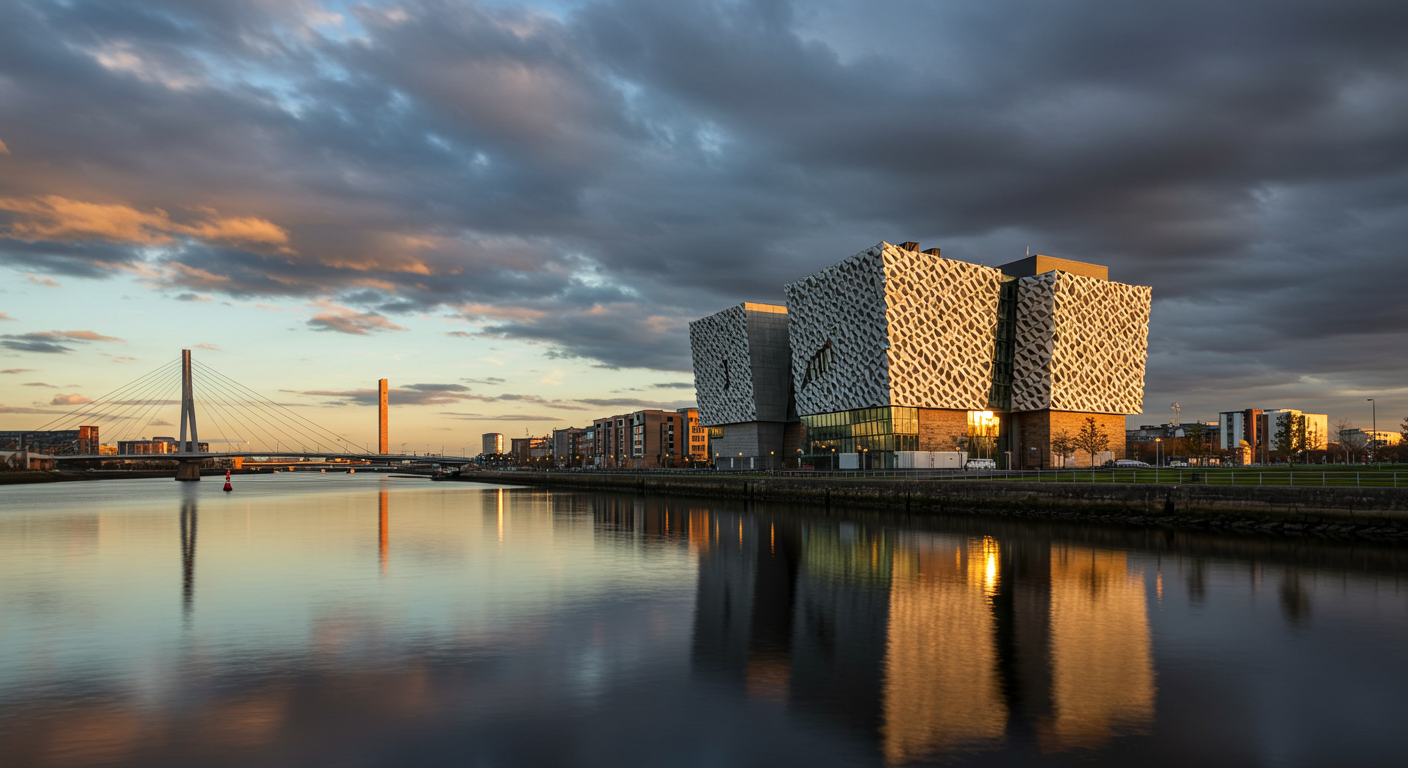
Dundee sits on the north bank of the Firth of Tay, Scotland's fourth-largest city and one of its most transformed. Once defined by jute, jam, and journalism, Dundee has reinvented itself as a design and cultural destination — named a UNESCO City of Design and anchored by a £1 billion waterfront regeneration that has reshaped the city centre. V&A Dundee is the region's flagship attraction — Scotland's first design museum and the only V&A outside London. Designed by Japanese architect Kengo Kuma, the building rises from the waterfront like a cliff face, its dramatic concrete panels echoing the Tay estuary. Open daily 10am to 5pm, with free entry to the permanent galleries. Discovery Point, on the same waterfront, is home to RRS Discovery — the ship that carried Captain Robert Falcon Scott and Ernest Shackleton on their first Antarctic expedition in 1901. Built in Dundee, the ship is an award-winning visitor experience. Open daily 9am to 5pm in summer. The Explore More Pass combines Discovery Point with Verdant Works for £26. Verdant Works is an interactive museum of Dundee's jute heritage — industrial history brought to life in a beautifully refurbished mill. Mon-Sat 10am-5pm, Sun 11am-5pm. HM Frigate Unicorn, moored in Victoria Dock, is one of the oldest ships afloat — a 19th-century warship preserved in remarkable condition. Dundee Law, the city's volcanic hill, offers panoramic views over the Tay, the bridges, and the Angus coast beyond. The city is also the gateway to the Angus Glens and the Cairngorms.
Stirling
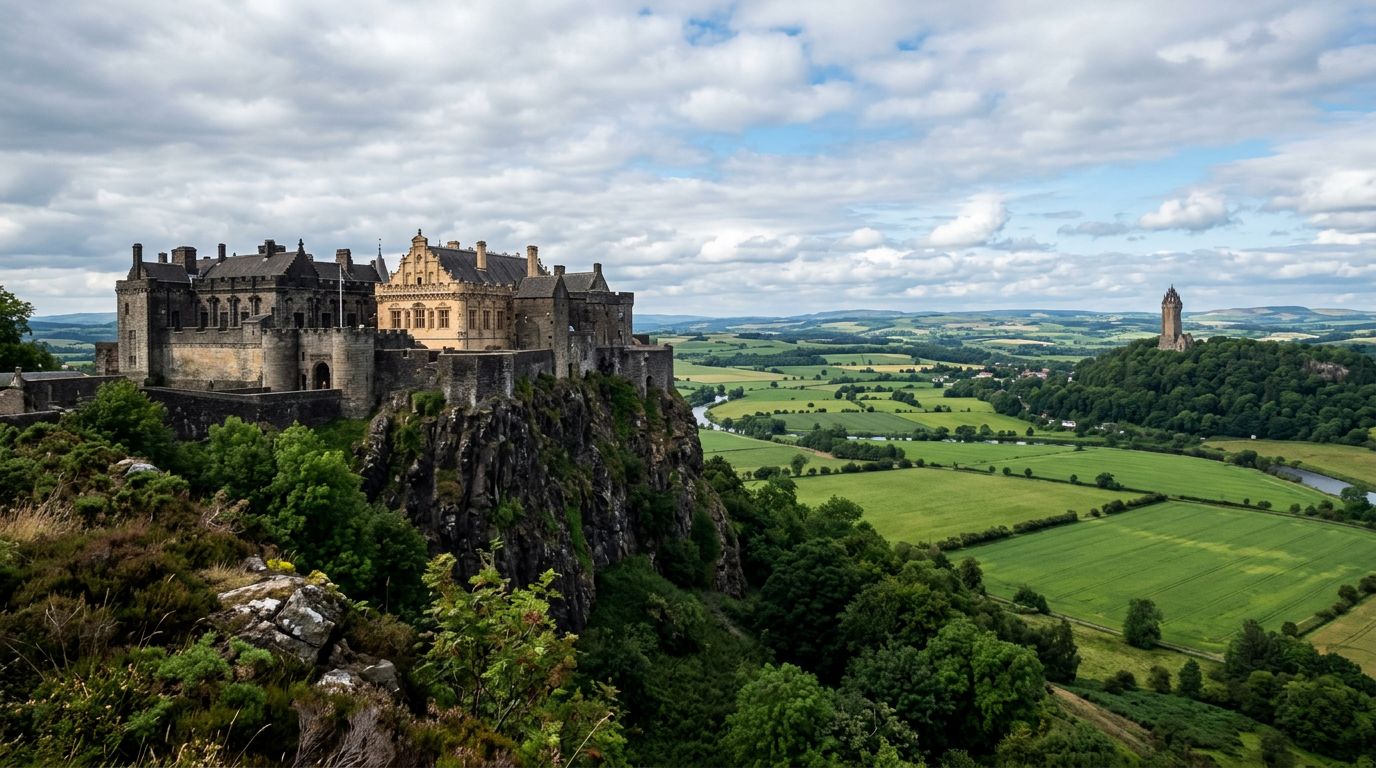
Stirling sits at the geographic heart of Scotland and packs more history per square metre than almost anywhere in the UK. This is where the wars of Scottish independence were fought and won — the castle, the battlefields, and the monuments that shaped a nation are all within a few miles of each other. Stirling Castle rivals Edinburgh Castle in historical importance and arguably surpasses it in the quality of its preserved interiors. Perched on a volcanic crag with views across the carse to the Ochils, the Highlands, and on clear days the Forth bridges, the castle was a royal residence and military stronghold for centuries. The Renaissance Palace, completed around 1540, is one of the finest examples of its kind in the UK. The Great Hall was the largest banqueting hall built in medieval Scotland. The Stirling Heads — carved oak medallions depicting royalty, courtiers, and mythical figures — are among the most remarkable works of Renaissance art in Scotland. Mary Queen of Scots was crowned here as an infant in 1543. The National Wallace Monument rises 67 metres from the summit of Abbey Craig, the spot where William Wallace watched the English army approach before leading his forces to victory at the Battle of Stirling Bridge in 1297. The 246-step climb to the top is rewarded with sweeping views across Stirling, the castle, and the surrounding landscape. Inside, Wallace's sword — a massive two-handed weapon measuring 1.6 metres — is on display. The Battle of Bannockburn Visitor Centre, 2 miles south of the city centre, marks the site where Robert the Bruce's outnumbered Scottish army defeated Edward II's English forces on 23-24 June 1314. This victory secured Scotland's independence for centuries. The centre uses immersive 3D technology to recreate the battle experience. The statue of Robert the Bruce looks out across the battlefield toward Stirling Castle in the distance. The cobbled Old Town links castle to town, passing the Church of the Holy Rude (where Scottish monarchs were crowned), Cambuskenneth Abbey (James III's burial place), and the Smith Art Gallery and Museum (free, home to the world's oldest known football, circa 1540).
St Andrews
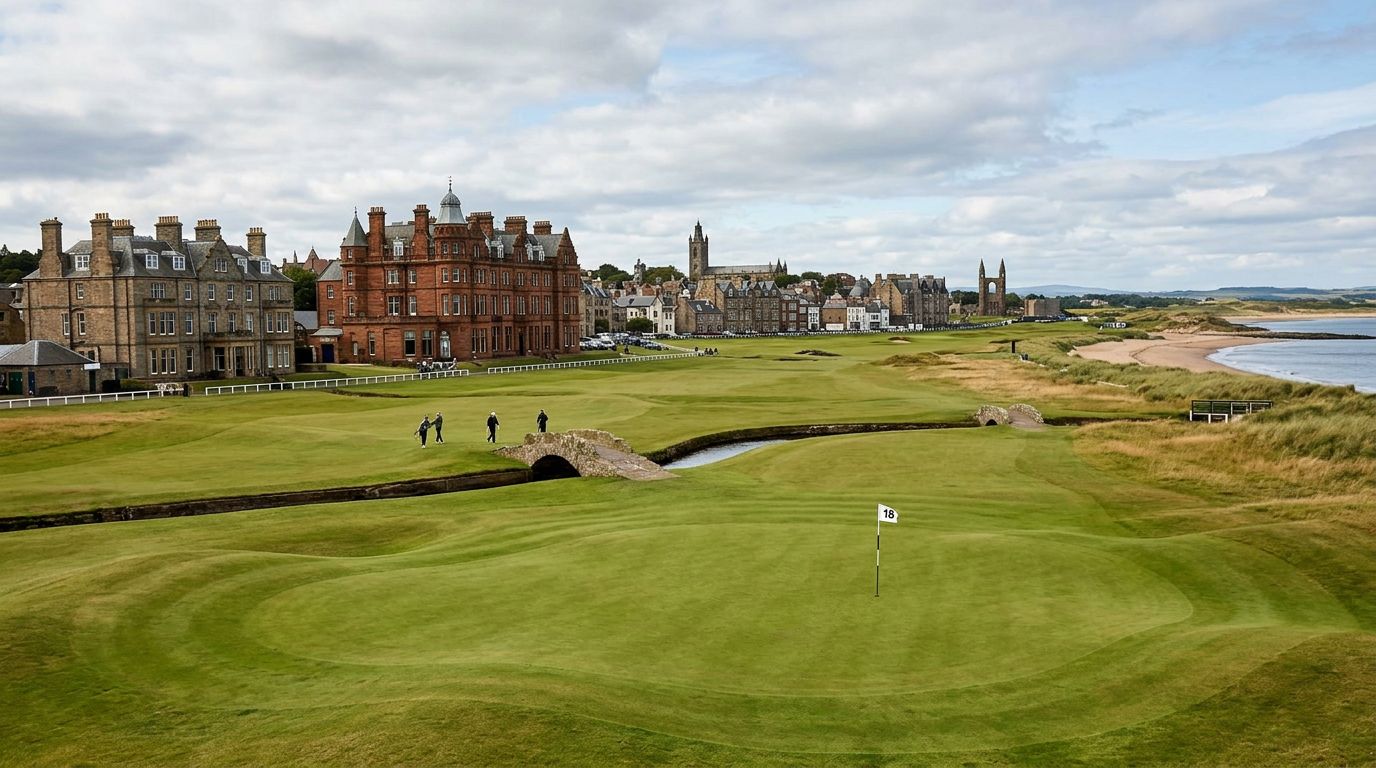
St Andrews is a small coastal town on the east coast of Fife that punches far above its weight. It is the Home of Golf — the Old Course, where the game has been played since the 15th century, sits at the edge of town with the iconic R&A clubhouse behind the first tee. It is also home to the University of St Andrews, founded in 1413, Scotland's oldest university and consistently ranked among Britain's best. Prince William and Catherine Middleton met here as students. The Old Course is a public course, open to anyone subject to ballot or advance booking. The 2026 high season green fee is £355, with a caddie adding roughly £120 including tip. The course is closed on Sundays. St Andrews Links encompasses seven public courses — the New Course, Jubilee, and Castle Course offer excellent golf without the Old Course's demand. The R&A World Golf Museum, adjacent to the first tee, covers the history of the sport from its origins. Beyond golf, St Andrews has atmospheric medieval ruins. St Andrews Cathedral, once Scotland's largest and most magnificent church, was founded in 1158 and its ruins still dominate the town's eastern headland. St Andrews Castle, nearby, features dramatic cliff-top ruins including a siege tunnel and bottle dungeon. Both are managed by Historic Environment Scotland. The town's West Sands — the long, wide beach featured in the opening scene of Chariots of Fire — stretches north from the links. The town itself is compact and walkable, with three main medieval streets (South Street, Market Street, North Street) lined with independent shops, cafes, and restaurants. Jannetta's Gelateria is a local institution. St Andrews sits within the Kingdom of Fife, easily combined with the East Neuk fishing villages to the south. Edinburgh is under 90 minutes by car; Dundee is 30 minutes north.
Perth
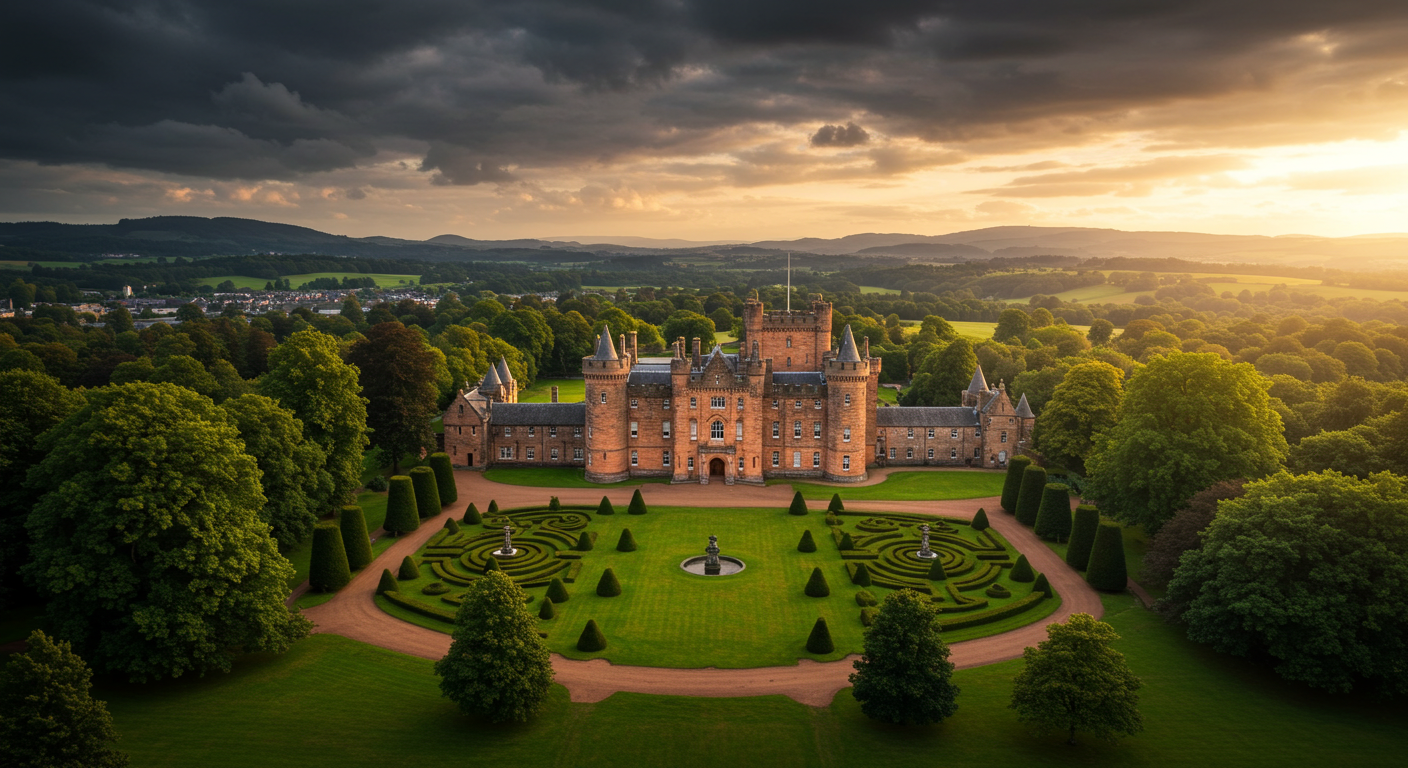
Perth sits at the geographic heart of Scotland — the ancient capital where Scottish kings were crowned, and today one of the country's most connected mid-size cities. Edinburgh is 1 hour 20 minutes by train; Glasgow is 1 hour. Perth sits at the junction of Highland and Lowland rail lines, making it an ideal base for exploring central Scotland. Perth Museum reopened in 2024 and is now home to the Stone of Destiny — the coronation stone of Scottish kings, used at every Scottish and English coronation since Kenneth MacAlpin in the 9th century, and moved from Edinburgh Castle to Perth. Entry to the museum is free. The stone's return to Perth, where it was kept at Scone for centuries, is a major cultural moment. Scone Palace, two miles north, is the crowning place of 42 Scottish kings. Moot Hill, where the coronations took place, remains — a mound where kings were inaugurated on the Stone of Destiny. The palace opens 1 April to 31 October 2026, £15 adults. The grounds include a tartan maze of 2,000 beech trees and 100 acres of gardens. The Black Watch Castle & Museum occupies Balhousie Castle in Perth — Scotland's oldest Highland regiment, founded in 1739. Free entry. Guided tours at 11am and 2pm. The regiment's history from Fontenoy to the present is powerfully told. The River Tay, Scotland's longest river (119 miles), flows through Perth. North Inch and South Inch parks flank the river — open green space in the city centre. Salmon fishing is a Tay tradition. Kinnoull Hill, east of the city, offers the best short walk near any Scottish city — a 3km, 1-hour cliff-edge walk with views over the Tay valley. Perth is the ancient capital of Scotland — a city that deserves more than a passing glance.
Oban
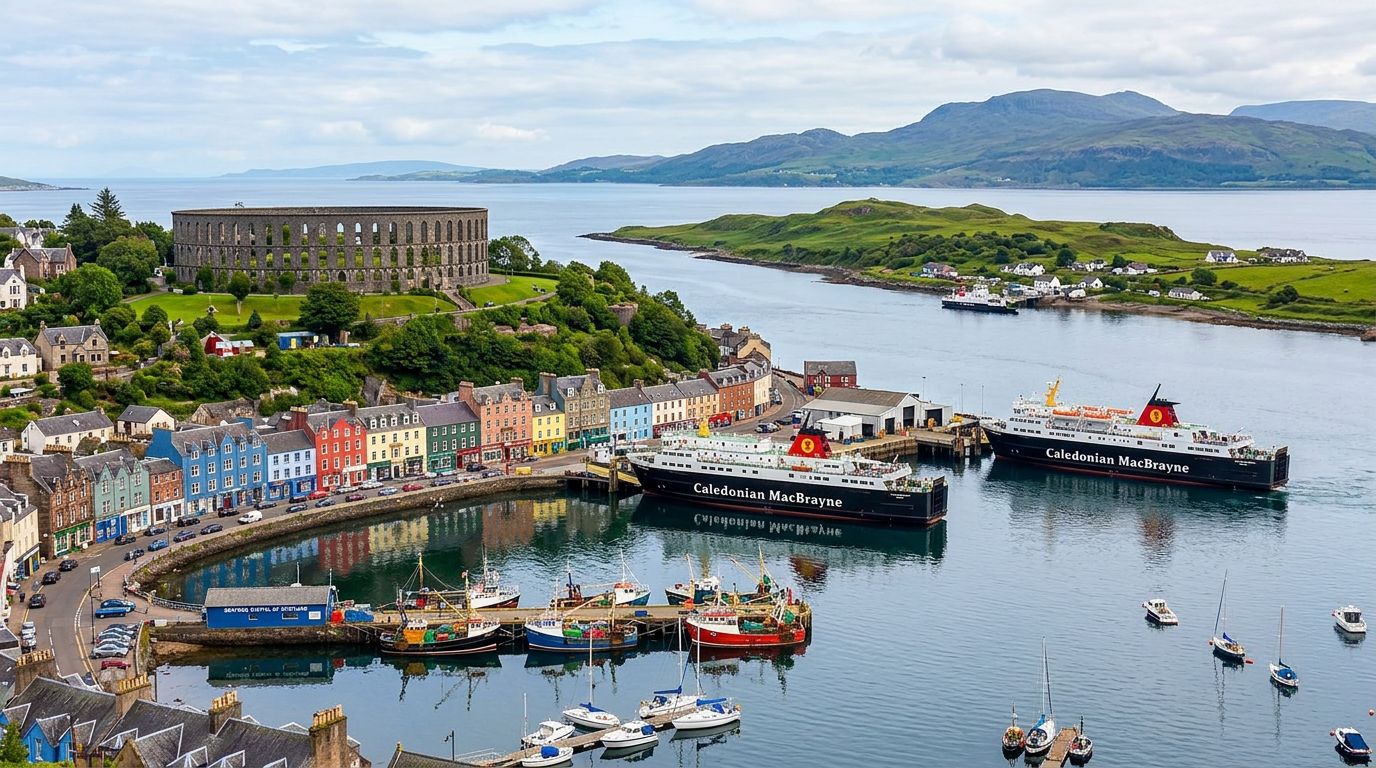
Oban is a compact harbour town on Scotland's west coast that punches well above its weight. Known as both the Seafood Capital of Scotland and the Gateway to the Isles, it combines fresh-off-the-boat seafood, one of Scotland's oldest working whisky distilleries, a Victorian folly with panoramic views, and daily ferry connections to some of the most beautiful islands in the Hebrides. McCaig's Tower dominates the Oban skyline from Battery Hill. This Victorian colosseum — built in 1897 by local banker John Stuart McCaig — offers some of the best panoramic views in western Scotland: the harbour below, the island of Kerrera across the water, and on a clear day, the Isle of Mull on the horizon. The climb from the town centre takes about 10 minutes and is free. The Oban Seafood Hut (also known as the Green Shack) on the Railway Pier is legendary — queues form year-round for langoustines, dressed crab, and scallops served straight from the shell. The town's restaurants and waterfront eateries maintain Oban's reputation as Scotland's seafood capital. Oban Distillery, in the heart of the town, is one of Scotland's oldest licensed distilleries and produces a widely admired 14-year-old single malt. Guided tours and tastings are available daily. The distillery's town-centre location makes it unique — most Scottish distilleries are in remote locations. CalMac ferries depart from Oban's harbour for the Inner Hebrides. The crossing to Craignure on the Isle of Mull takes approximately 45 minutes and runs multiple times daily. From Mull, you can reach Tobermory (the island's colourful capital), Iona (St Columba's ancient abbey), and Staffa (Fingal's Cave). Vehicle spaces should be booked well in advance for summer sailings. Dunstaffnage Castle, 3 miles north of Oban, is a 13th-century fortress on a promontory overlooking the Firth of Lorn. Castle Stalker at Appin, visible from the road, is one of Scotland's most photographed tower houses.
Fort William
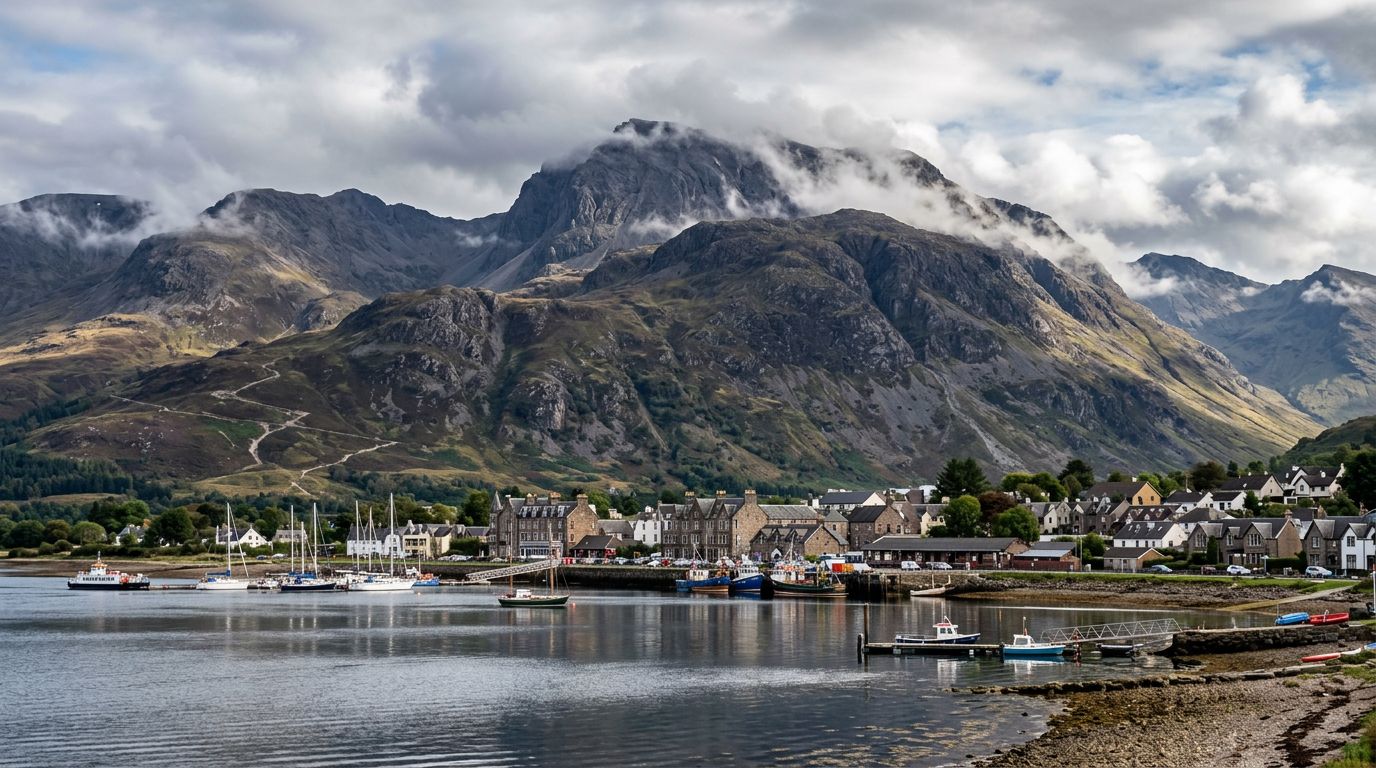
Fort William sits at the foot of Ben Nevis in the heart of the Scottish Highlands and has earned its title as the Outdoor Capital of the UK. This is the gateway to some of Britain's most dramatic mountain, loch, and glen scenery — and the base for several of Scotland's most iconic experiences. Ben Nevis is the highest mountain in the British Isles at 1,345 metres (4,413 feet). The main route — the Pony Track or Tourist Path — starts from the Glen Nevis Visitor Centre and is a serious 17-kilometre round trip taking 7 to 10 hours. The path is well-maintained but the summit is frequently cloud-covered. Even without a summit attempt, the drive through Glen Nevis — a spectacular glacial valley beneath the mountain — is worth the visit. The Jacobite Steam Train runs from Fort William to the fishing port of Mallaig, crossing the iconic Glenfinnan Viaduct — 21 arches that featured as the Hogwarts Express route in the Harry Potter films. The train operates from April to October with up to two daily services. The 2-hour journey passes Glenfinnan Monument (where Bonnie Prince Charlie raised his standard in 1745), Loch Eil, and views of the Small Isles. Book at least 60 days in advance. The regular ScotRail service runs the same route year-round at lower cost. Neptune's Staircase at Banavie, just north of Fort William, is the longest staircase lock in Britain — eight locks on the Caledonian Canal that raise boats 64 feet over 500 yards. Designed by Thomas Telford and completed in 1822, watching boats navigate the locks takes up to 90 minutes and is a fascinating free spectacle. The canal towpath offers excellent walking and cycling. The West Highland Museum in the town centre is free and covers the region's history from the Jacobite risings to Highland life. Fort William's waterfront promenade along Loch Linnhe is a pleasant evening walk.
FeaturedLoch Ness
Loch Ness needs no introduction, but it deserves more than its monster. This is Scotland's most famous body of water — 23 miles long, up to 755 feet deep (deeper than the North Sea), and holding more fresh water than all the lakes of England and Wales combined. The loch sits in the Great Glen, a geological fault line that cuts Scotland in two from Fort William to Inverness. Urquhart Castle is the postcard image of Loch Ness. This medieval fortress ruin sits on a rocky promontory on the western shore, near the village of Drumnadrochit. Once one of Scotland's largest castles, it saw centuries of conflict between Scots and English during the Wars of Independence, and was finally blown up by retreating government troops during the Jacobite Risings. The Grant Tower survives almost intact and offers panoramic views up and down the loch. Entry is £14 online (£16 walk-up), managed by Historic Environment Scotland. Drumnadrochit is the hub for Loch Ness tourism. The Loch Ness Centre (£17) presents the history of the monster legend with scientific rigour. Several operators run boat cruises from Drumnadrochit and nearby piers — many equipped with sonar so you can watch the loch bed scroll past on screen. Fort Augustus sits at the southern end of the loch, where the Caledonian Canal meets the water through a dramatic flight of locks. Watching boats rise and fall through the locks is a relaxing spectacle, and the village has good cafes and a pleasant canal towpath walk. Inverness, at the northern end, is the Highland capital — a compact city with a Victorian castle overlooking the River Ness, a covered Victorian market, and a strong food scene. Culloden Battlefield, where the last pitched battle on British soil was fought in 1746, is 6 miles east of the city. The Jacobite defeat at Culloden ended the Stuart claim to the throne and changed Highland culture forever.
Loch Lomond
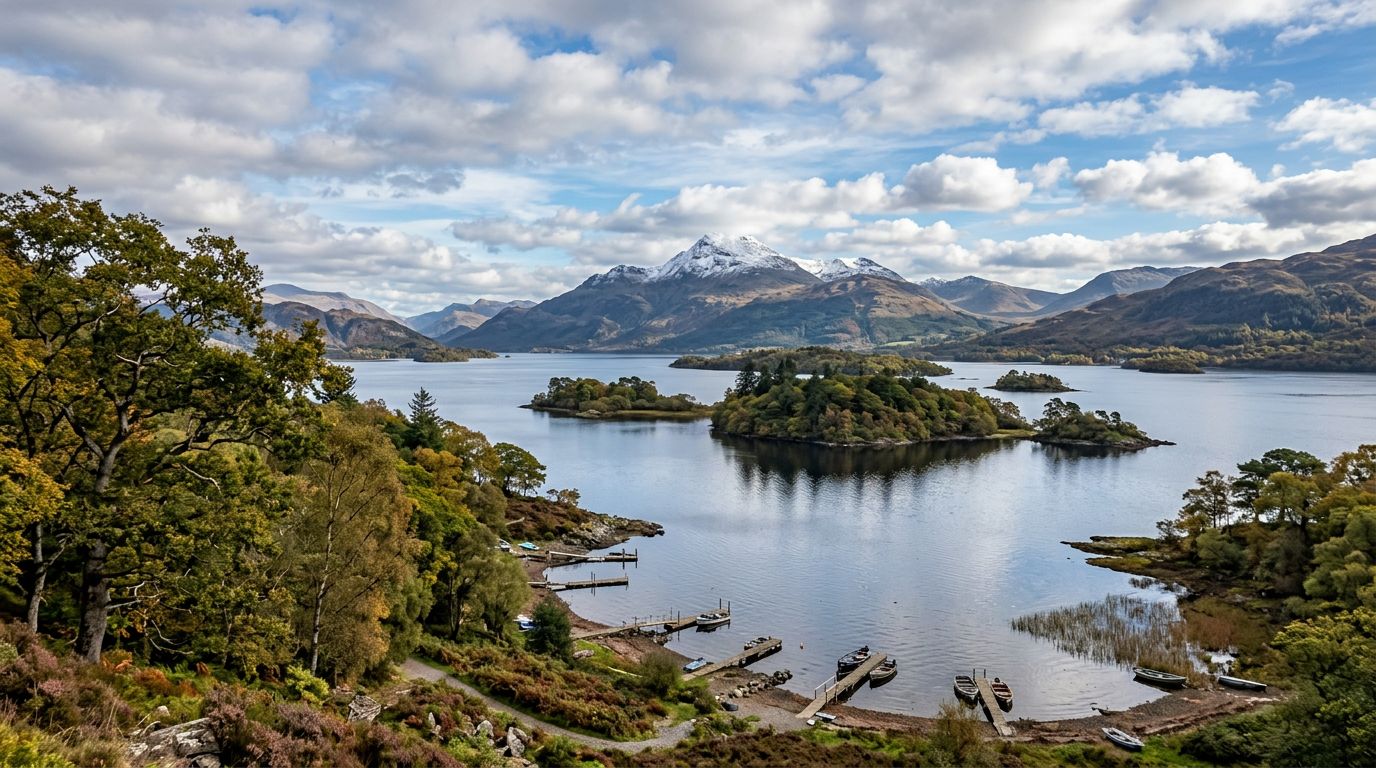
Loch Lomond and The Trossachs National Park was Scotland's first national park, established in 2002. At 720 square miles, it encompasses 22 lochs, 21 Munros (mountains over 3,000 feet), 39 miles of coastline, and some of the most varied scenery in Scotland — from gentle lowland shores to dramatic Highland peaks, all within 30 minutes of Glasgow. Loch Lomond itself is Britain's largest freshwater loch by surface area, stretching 24 miles from the lowland town of Balloch in the south to the Highland village of Ardlui in the north. The character changes dramatically — the southern end is broad, island-dotted, and gentle; the northern end narrows between steep mountains and feels properly Highland. The Trossachs, often called the Highlands in Miniature, lie to the east. Loch Katrine sits at their heart, served by the SS Sir Walter Scott — a Victorian steamship that has cruised the loch since 1900. The loch has supplied Glasgow's drinking water since 1859. Ben A'an (461m) above Loch Katrine is the park's most popular short hike — a 2-3 hour return walk to a rocky summit with dramatic views. Ben Lomond (974m) is the most southerly Munro in Scotland, climbed from Rowardennan on the eastern shore. The West Highland Way, Scotland's most famous long-distance path, follows the loch's eastern shore northward. The bonnie village of Luss, with its slate-roofed cottages on the western shore, is the park's most photographed spot. Loch Lomond Shores at Balloch offers boat cruises, shopping, a Sea Life Aquarium, and family-friendly activities. The park draws four million visitors annually. May, September, and October offer the best balance of weather, fewer crowds, and — in autumn — outstanding colours.
 Featured
North Coast 500
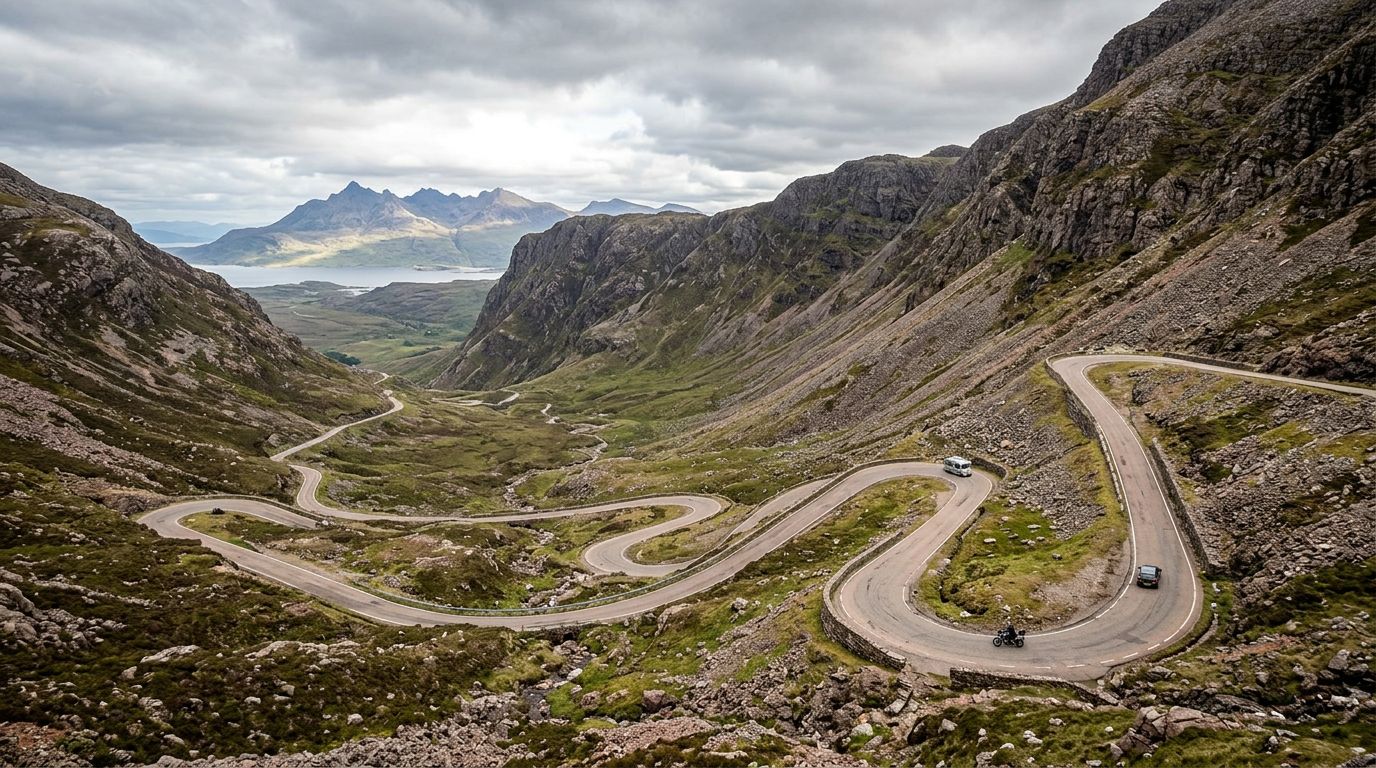
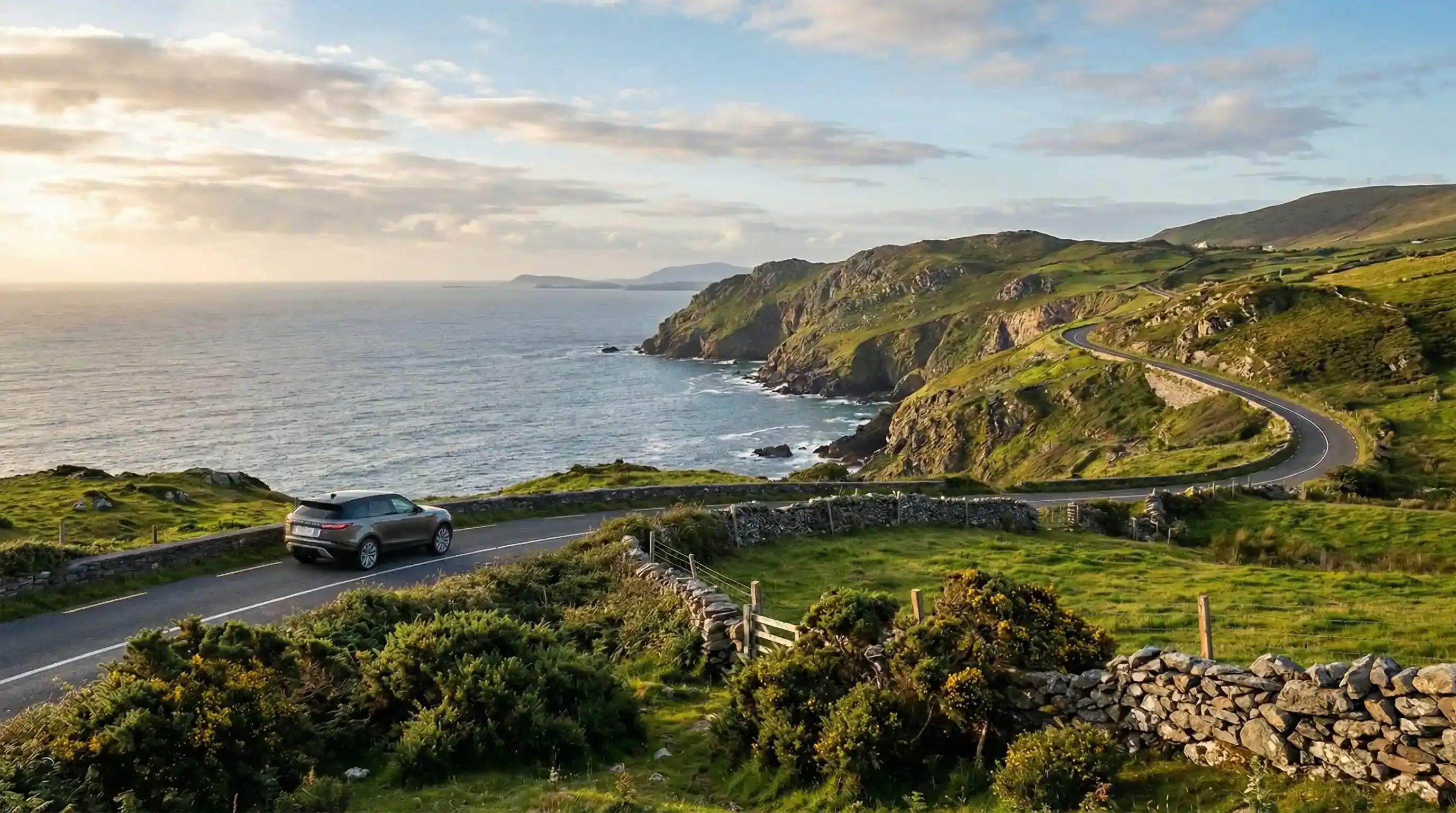
The North Coast 500 is a 516-mile signposted scenic driving route around the far north of Scotland, starting and ending at Inverness Castle. Often called Scotland's Route 66, it is widely regarded as one of the world's greatest road trips — a loop through five distinct landscapes stitched together: the gentle farmland of the Black Isle, the dramatic climb over Bealach na Ba to Applecross, the wild coastal stretch through Wester Ross and Assynt, the Atlantic edge along the north coast of Sutherland and Caithness, and a softer run south through Dornoch and back to Inverness. Bealach na Ba is the single most dramatic drive on the route. This mountain pass climbs from sea level to 2,054 feet in roughly six miles, with gradients of one-in-five and three tight hairpin bends near the top. The summit view, on a clear day, reaches to Skye and the Outer Hebrides. It is not suitable for large motorhomes or caravans — an alternative coastal road via Shieldaig is available. Applecross village at the foot of the pass is famous for the Applecross Inn. The wild stretch from Ullapool to Durness passes under the distinctive profiles of Suilven and Stac Pollaidh in Assynt, crosses the Kylesku Bridge, and heads north through some of the loneliest driving in Britain. Durness rewards with Smoo Cave — the most dramatic sea cave on the mainland, featuring an interior waterfall and summer boat trips — plus Sango Sands, Balnakeil Beach, and Ceannabeinne Beach. The north coast runs east through Tongue and Thurso to John o'Groats, where the Duncansby Stacks — dramatic sea stacks — are the real highlight. The east coast return passes Dunrobin Castle near Golspie (a fairy-tale French chateau transplanted to the Highlands) and the handsome town of Dornoch with its cathedral and championship golf course.
Isle of Mull
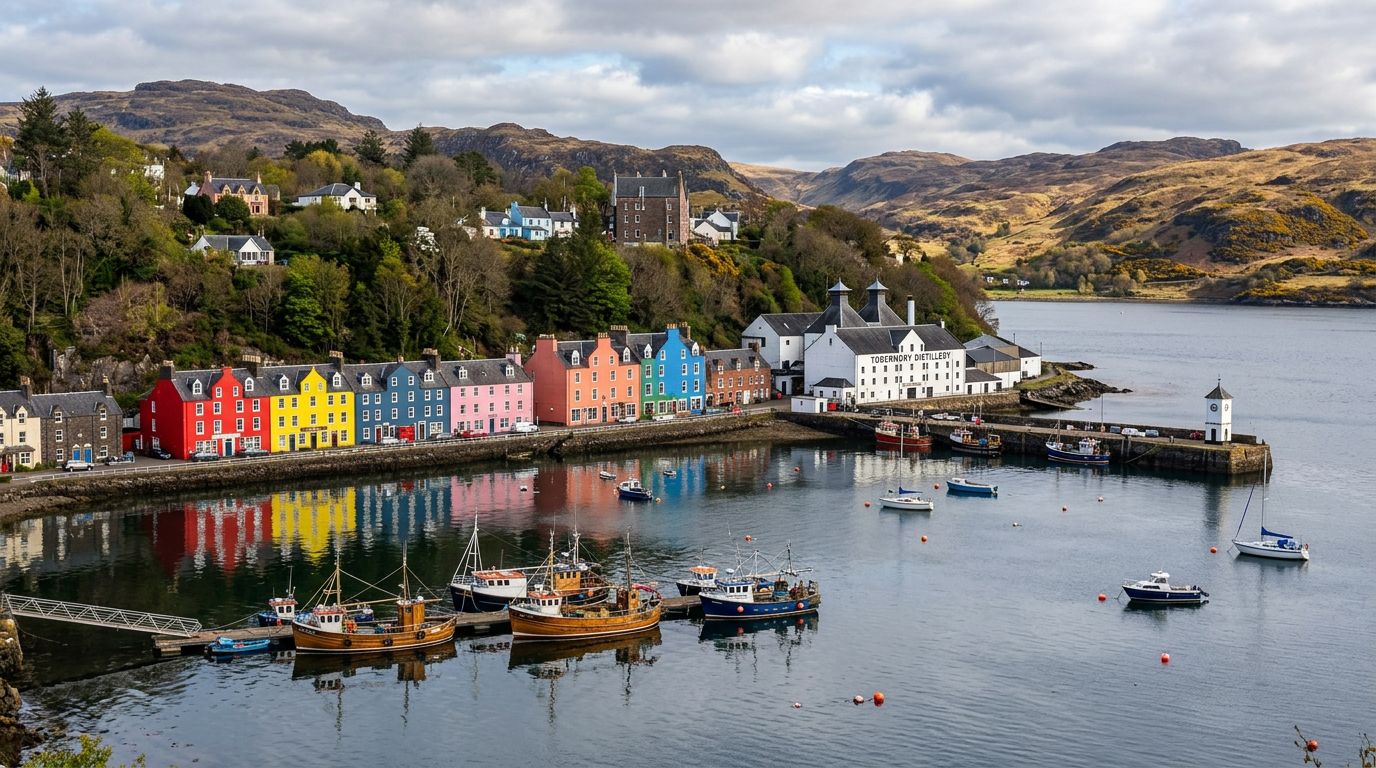
The Isle of Mull is the second-largest island of the Inner Hebrides, reached by a 45-minute CalMac ferry from Oban to Craignure. At roughly 340 square miles, it is large enough for a week of exploration — dramatic mountain scenery, quiet single-track roads, remote beaches, and a concentration of wildlife that rivals anywhere in Scotland. Tobermory is Mull's capital and most recognisable landmark. Its curved harbour lined with brightly painted buildings has appeared on postcards and children's television alike. The town has an independent character — craft shops, the Tobermory Distillery (established 1798, one of Scotland's oldest), seafood restaurants, and a working fishing fleet. The harbour was painted in its distinctive colours by fishermen in the 19th century so they could identify their homes from sea. Duart Castle stands on a dramatic clifftop at the eastern entrance to the Sound of Mull. Home to the Chief of Clan Maclean for over 700 years, the 13th-century keep was restored from ruin in 1912 and is open to visitors from April to October. The state rooms, dungeons, and summit views make it one of the finest castle visits in Scotland. Mull is a gateway to some of Scotland's most remarkable smaller islands. Staffa, six miles off the west coast, is famous for Fingal's Cave — a sea cave formed entirely of hexagonal basalt columns, which inspired Mendelssohn's Hebrides Overture. Boat trips run from Fionnphort and Ulva Ferry (April to October). The Treshnish Isles, nearby, host one of Scotland's most accessible puffin colonies from May to early August, along with guillemots, razorbills, and grey seals. Wildlife is Mull's other great draw. The island has one of the highest densities of white-tailed sea eagles in Europe — reintroduced in the 1970s, they now breed successfully across the island. Boat-based eagle-watching tours operate from several locations. Minke whales, dolphins, basking sharks, and otters are regularly spotted from the coast, particularly along the south and west shores. Golden eagles nest in the mountains inland.
Isle of Arran
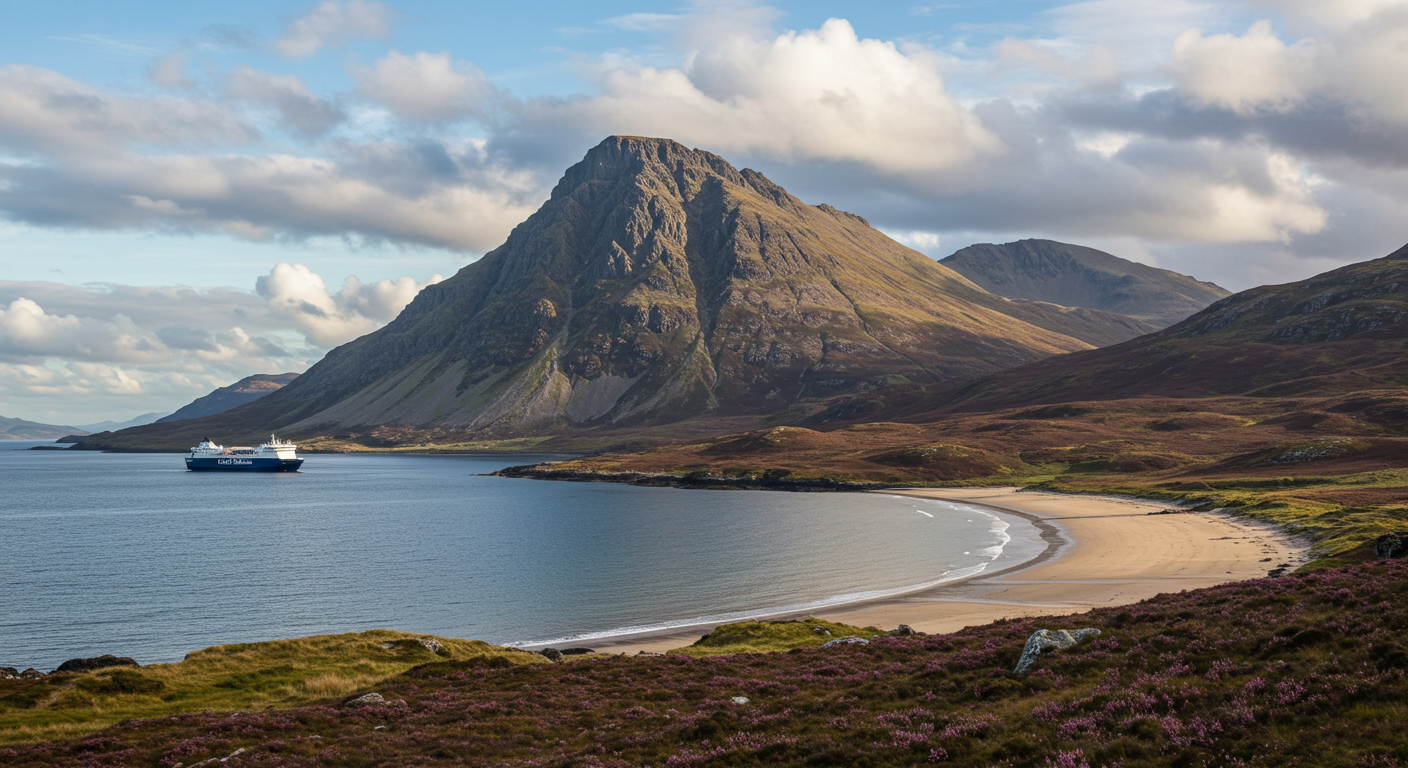
The Isle of Arran sits in the Firth of Clyde, visible from the Ayrshire coast and reached by CalMac ferry from Ardrossan or Troon. Known as Scotland in Miniature, the island compresses Highland grandeur and Lowland gentleness into a single landmass — the Highland Boundary Fault runs through its centre, creating dramatic contrasts between the rugged north and the lusher south. In April 2025, Arran was designated a UNESCO Global Geopark, recognising its extraordinary geological heritage. Goat Fell, at 874 metres (2,866 feet), is the island's highest point — jagged summits with a trail starting near Brodick Castle. On a clear day, views extend to the Ayrshire coast and Northern Ireland. Brodick Castle (NTS) dominates Brodick Bay — formal gardens, woodland trails, an adventure playground, and views over the bay to the mainland. Machrie Moor Stone Circles on the west coast are Bronze Age standing stones in a haunting moorland setting. Lochranza Castle, picturesque 14th-century ruins at the island's northern tip, completes the historical picture. Arran has two distilleries. Isle of Arran Distillery at Lochranza is the oldest on the island, offering tours year-round. Lagg Distillery on the south coast produces peated spirit — the newest addition to Arran's whisky story. The 56-mile coastal road circuit links all the island's highlights. CalMac ferries run from Ardrossan to Brodick (55 minutes), Troon to Brodick (55 minutes), and Claonaig to Lochranza (30 minutes).
Orkney
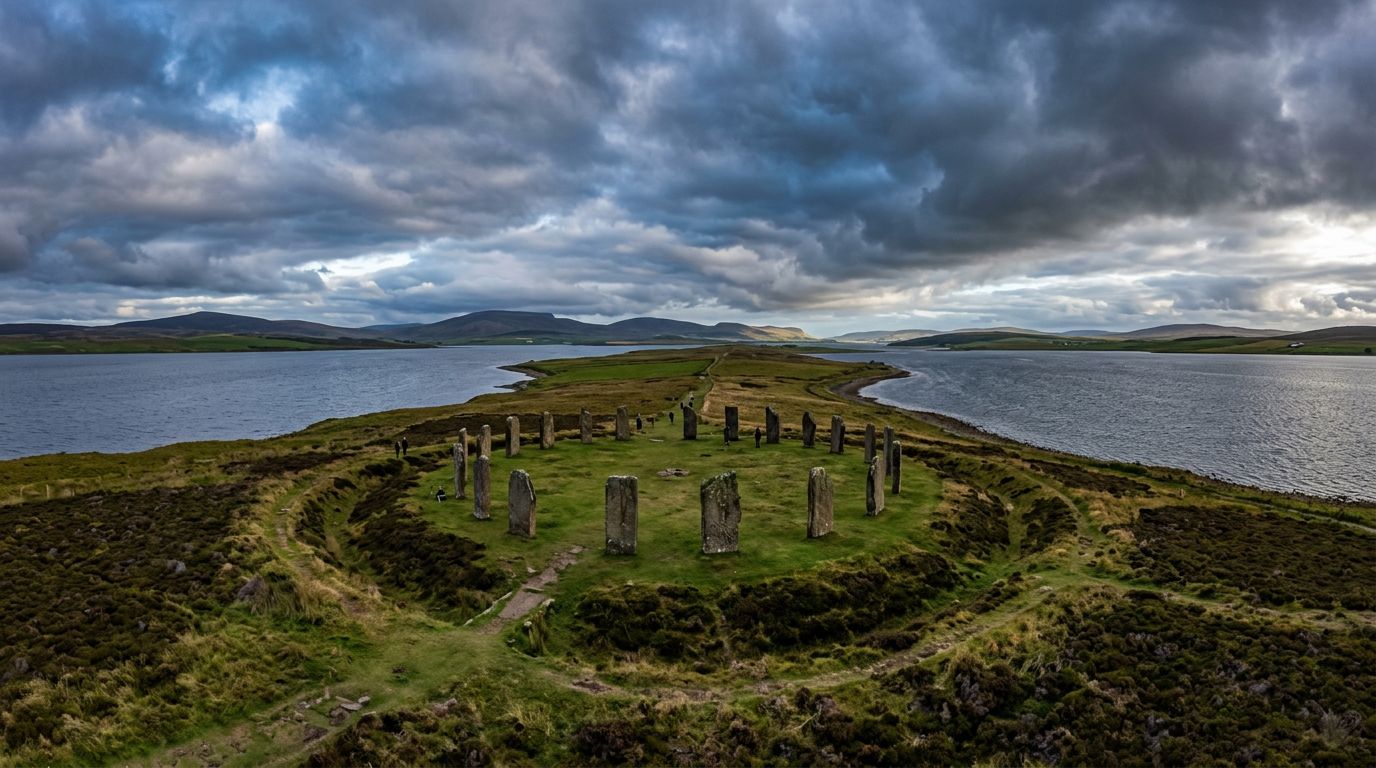
Orkney is an archipelago of roughly 70 islands off Scotland's north coast, connected to the mainland by ferry from Scrabster, Gills Bay, or Aberdeen, and by flights to Kirkwall. The islands feel distinctly different from mainland Scotland — green, low-lying, fertile, and with an identity shaped as much by Norse heritage as by Scottish. The wind is constant, the light extraordinary, and the sense of deep history is everywhere. The Heart of Neolithic Orkney, a UNESCO World Heritage Site inscribed in 1999, brings together four remarkable monuments on the Orkney Mainland. Skara Brae is a 5,000-year-old village — older than Stonehenge and the Egyptian pyramids — with stone houses, furniture, and passageways preserved intact after being buried by sand for millennia and uncovered by a storm in 1850. The Ring of Brodgar is a great stone circle of 27 remaining stones (from an original 60) on a narrow isthmus between two lochs — free to visit and open year-round. The Stones of Stenness, erected around 3100 BC, keep four towering stones, the tallest nearly 6 metres. Maeshowe is a chambered cairn accessible only by guided tour, with Viking graffiti carved on its interior walls. Beyond the Neolithic sites, Orkney offers Kirkwall with its magnificent red sandstone St Magnus Cathedral (founded 1137), the Scapa Flow wartime heritage, the Italian Chapel (built by prisoners of war from a Nissen hut in the 1940s), and superb island-hopping. Hoy has the Old Man of Hoy sea stack and dramatic cliffs. The outer islands — Westray, Papa Westray, Sanday — offer seabird colonies, white beaches, and profound quiet. Orkney's food scene is exceptional for its size — Orkney beef, crab, lobster, cheese, and craft beer are all locally produced. The islands host a thriving arts and music scene, with the St Magnus International Festival each June.
Shetland
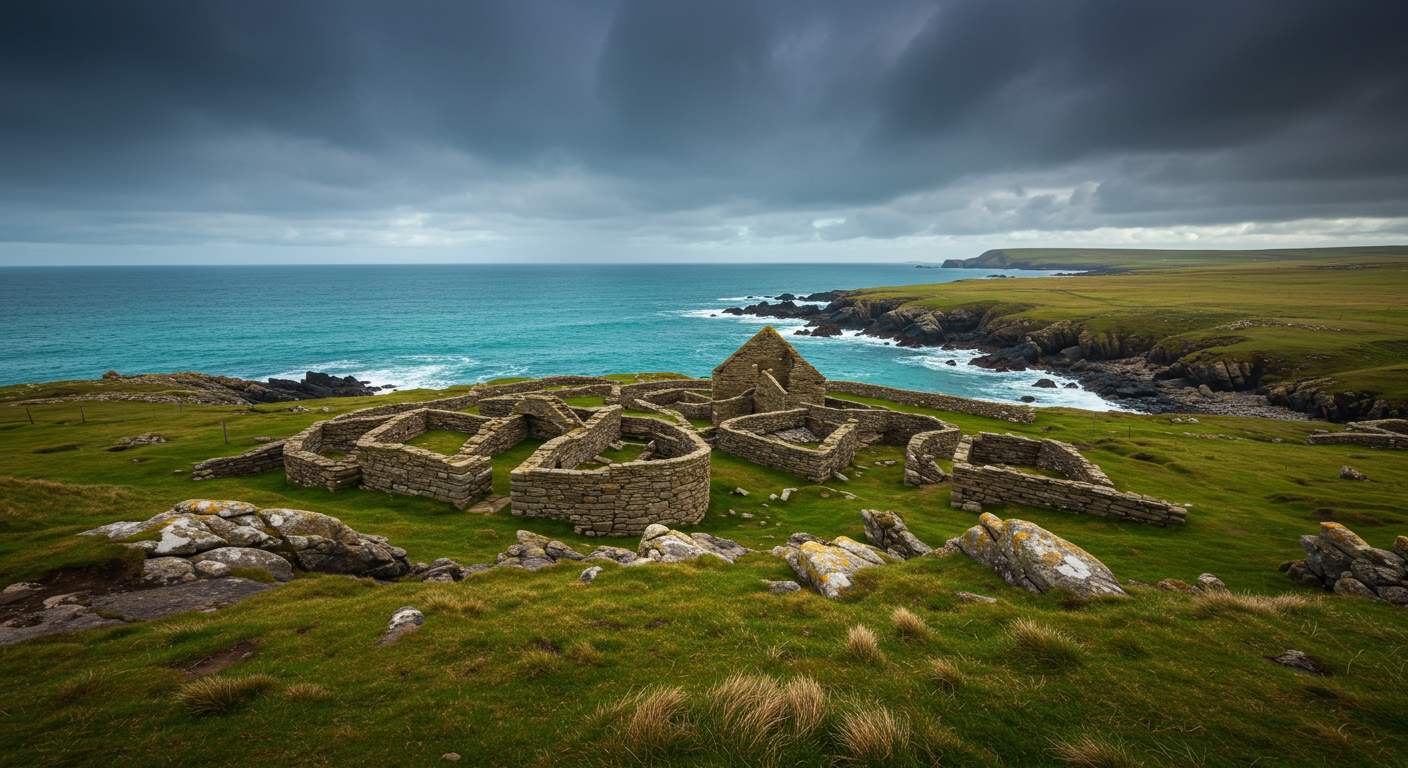
Shetland is Scotland's most northerly archipelago — over 100 islands, of which 16 are inhabited, stretching closer to Norway than to Edinburgh. Mainland Shetland is the largest island; Lerwick, the capital, is a vibrant harbour town. The archipelago demands time — allow 4-5 days for Mainland, a week if exploring the outer isles including Unst, Britain's most northerly inhabited island. Reaching Shetland is part of the adventure. NorthLink Ferries run overnight from Aberdeen to Lerwick (12 hours, cabins available). Alternatively, fly to Sumburgh from Aberdeen (1 hour). Up Helly Aa, on the last Tuesday of January (27 January 2026), is Europe's largest Viking fire festival. Up to 2,000 guizers in torchlit procession march through Lerwick, culminating in the burning of a full-size replica Viking galley. The procession is free to watch. Jarlshof, near Sumburgh, is an extraordinary multi-period site — Bronze Age, Iron Age, Pictish, Norse, and medieval ruins on one exposed headland. Uncovered by a storm, it tells 4,000 years of settlement in a single visit. Mousa Broch, on the tiny island of Mousa, is the best-preserved Iron Age broch in the world — a 13-metre drystone tower reached by summer boat. Storm petrels nest in the walls at night. Sumburgh Head offers puffins in summer, a lighthouse, and visitor centre. Scalloway Castle and Museum tell the Shetland Bus story — secret wartime boat runs to Norway. The simmer dim of June brings barely-dark nights and near-endless daylight.
Scottish Borders
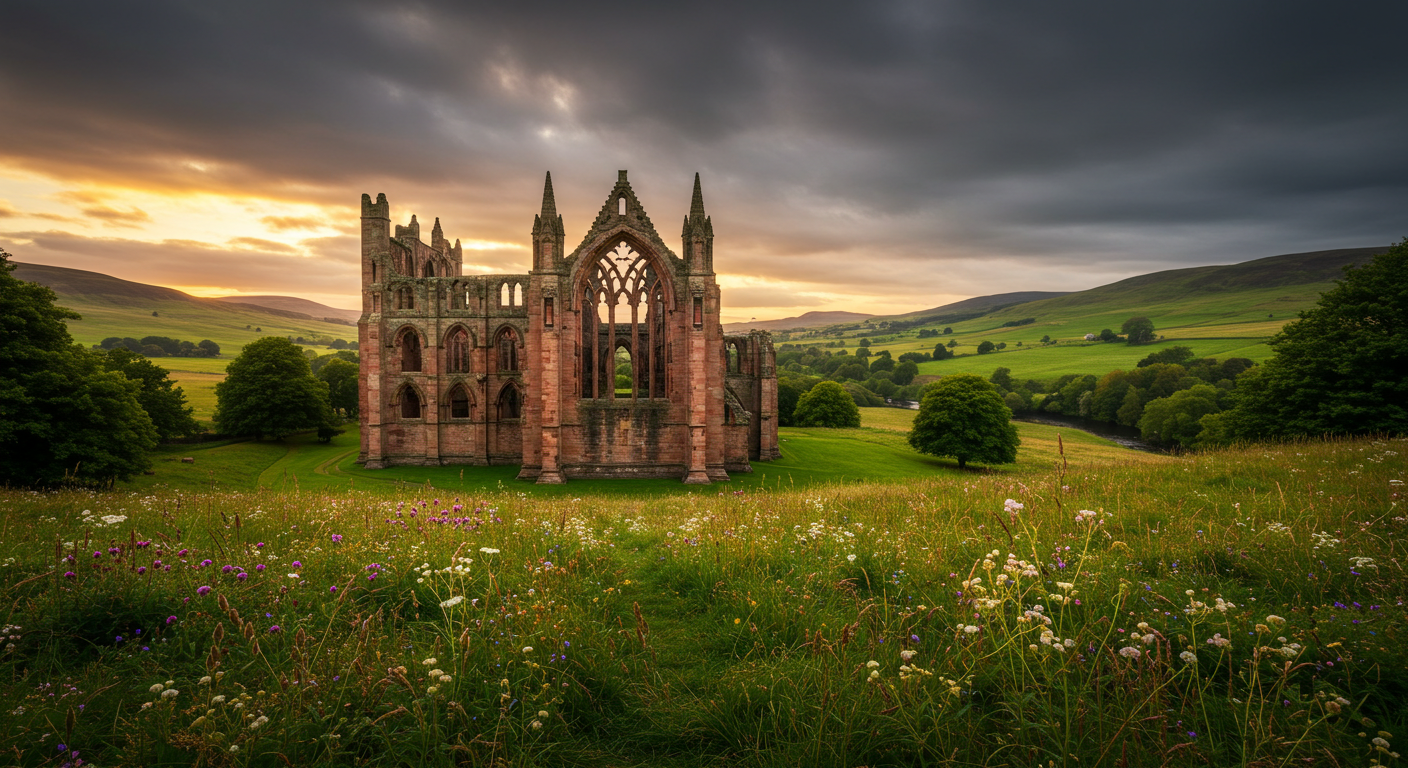
The Scottish Borders is the southeastern corner of Scotland, stretching along the English border from the coast to the hills of the Southern Uplands. It is Scotland's answer to the English countryside — gentle, green, and remarkably accessible from Edinburgh (roughly an hour by car). Unlike the dramatic Highlands, the Borders reward slow exploration: abbey ruins, river valleys, textile towns, and walking routes through rolling farmland and forest. The region is defined by its four great abbeys — Melrose, Jedburgh, Dryburgh, and Kelso — all founded in the 12th century and all ruined by English raids during the Wars of Independence. Melrose Abbey, founded in 1136, is the most complete and most visited. Its rose-tinted sandstone ruins are among the most beautiful in Scotland, and it is the burial place of Robert the Bruce's heart (his body lies in Dunfermline). Jedburgh Abbey sits dramatically in the town centre. Dryburgh, the most peaceful, lies in woodland by the Tweed. Kelso Abbey's massive west front still stands in the charming cobbled town near Floors Castle. Sir Walter Scott is the Borders' presiding spirit. Abbotsford, his fantastical mansion near Melrose, is open daily year-round — the visitor centre is free, and the estate walks are free. The house itself tells the story of the man who invented the historical novel and shaped Scotland's romantic image. Sir Walter Scott's Way is a 92-mile walking route linking sites associated with his life and work. Floors Castle, near Kelso, is the largest inhabited castle in Scotland and the seat of the Duke of Roxburghe. Overlooking the River Tweed with a Victorian walled garden, it opens 1 May to 30 September 2026 (£22 adults, children free). Kelso itself is one of Scotland's most attractive small towns — a French-style cobbled square, independent shops, and the Tweed flowing past. The River Tweed is one of Britain's great salmon rivers, and the region has a rich textile heritage — cashmere and tweed mills still operate in towns like Hawick and Selkirk. The Southern Upland Way, Britain's first official coast-to-coast long-distance path, crosses the region from west to east.
Dumfries & Galloway
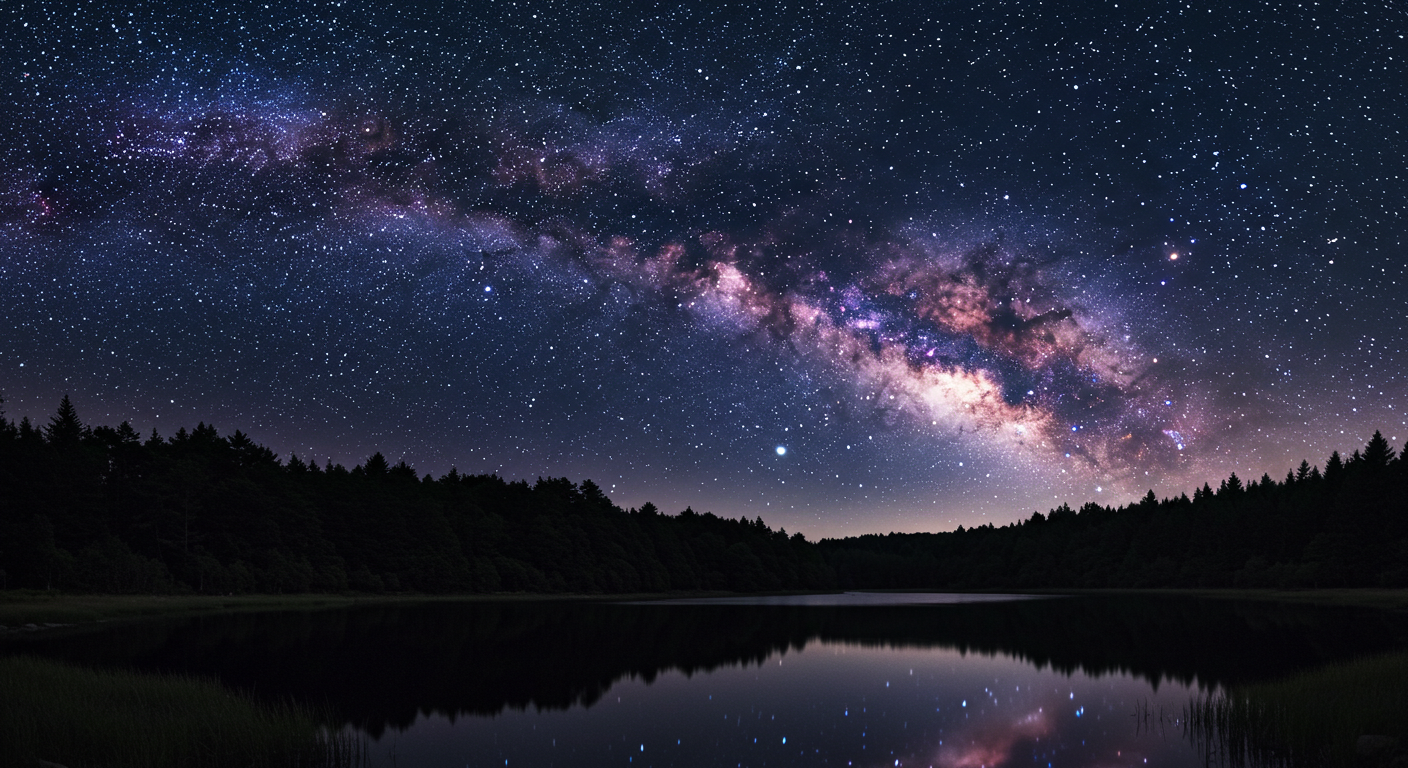
Dumfries & Galloway occupies Scotland's southwestern corner — a region of mild climate, garden tourism, and surprising cultural depth. It is often cited as Scotland's sunniest region, with a gentler climate than much of the country, and it rewards visitors who venture off the main Highland routes. Robert Burns is the region's presiding spirit. The poet spent his final years in Dumfries, and the town is packed with Burns connections — the Robert Burns Centre, Burns House (where he died in 1796), and the Globe Inn, his favourite pub, still serving today. Ellisland Farm, near Dumfries, is his best-preserved home — a modest farmhouse where he wrote Auld Lang Syne and Tam o'Shanter during the most productive period of his life. Galloway Forest Park is Britain's largest forest park, covering over 300 square miles of woodland, lochs, and hills. In 2009 it became the UK's first Gold Tier International Dark Sky Park — on a clear night, over 7,000 stars are visible, and the Milky Way stretches across the sky. The Raiders' Road Forest Drive is a scenic 10-mile route through the heart of the park. Caerlaverock Castle, south of Dumfries, is unique in Scotland — a triangular moated fortress with a twin-towered gatehouse. Sweetheart Abbey, near Dumfries, is a beautiful ruin founded in 1273. Kirkcudbright, the Artists' Town, has galleries, a working harbour, and a long tradition of painters drawn by the quality of light. The region's garden heritage is exceptional — mild winters and long summer days support species rarely seen elsewhere in Scotland. Threave Garden (NTS), Logan Botanic Garden, and Castle Kennedy Gardens are highlights. The Galloway coast offers sandy beaches and dramatic cliffs, often overlooked by visitors heading north.
Ayrshire
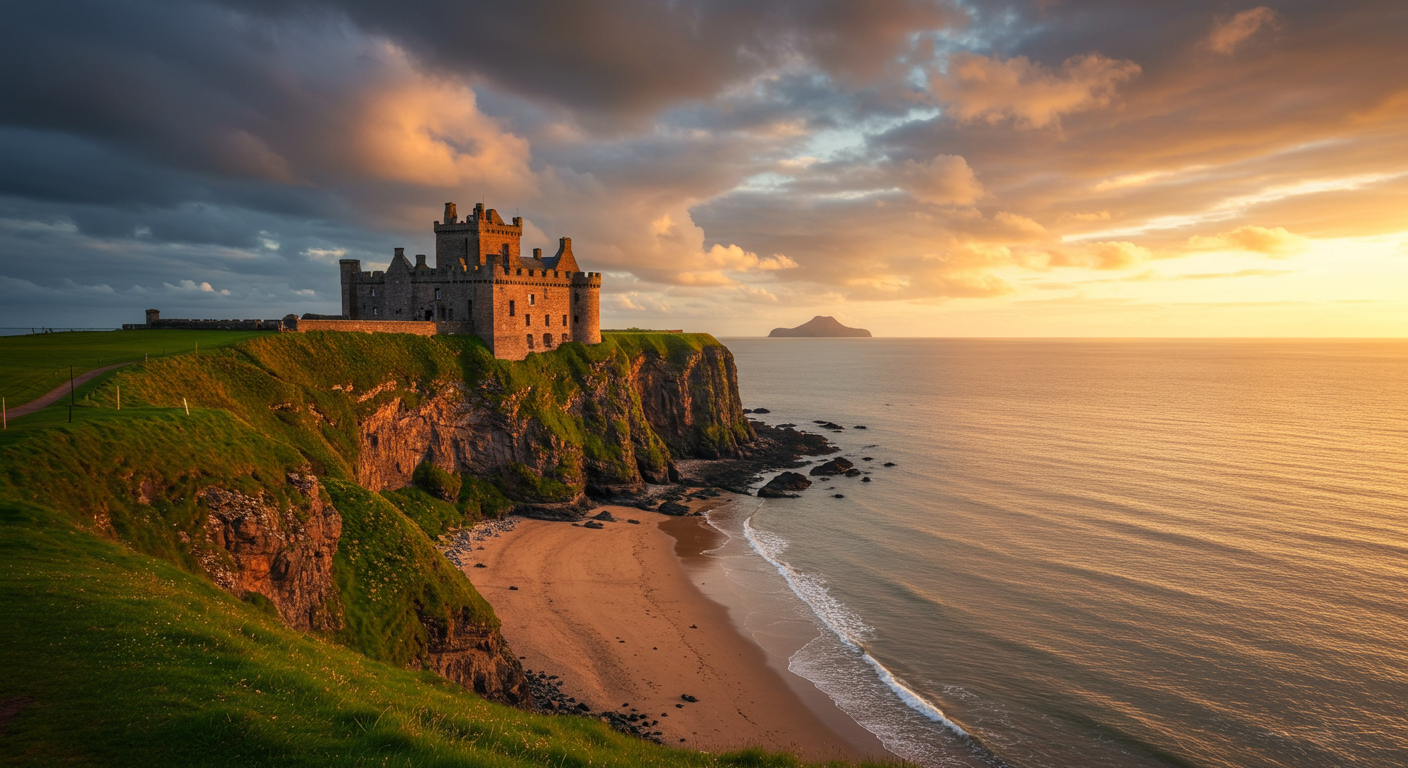
Ayrshire occupies Scotland's southwest coast, facing the Firth of Clyde and the Isle of Arran. It is Robert Burns Country — the poet was born in Alloway, and the Robert Burns Birthplace Museum (NTS) brings his world to life. It is also golf country — Royal Troon, Prestwick (birthplace of The Open, 1860), and Trump Turnberry are among the world's most famous courses. And it is castle country — Culzean Castle, Robert Adam's clifftop masterpiece, overlooks the sea to Ailsa Craig and Arran. The Robert Burns Birthplace Museum at Alloway is the essential first stop. Burns Cottage, where he was born in 1759, the museum with 5,000+ artefacts, Alloway Auld Kirk (setting for Tam o'Shanter), Brig o'Doon, and Burns Monument form a cohesive visitor experience. Adults £12. Alloway is a suburb of Ayr, 40 minutes from Glasgow. Culzean Castle (NTS) is Robert Adam's finest country house — a clifftop masterpiece with an Oval Staircase centrepiece, 260 hectares of estate, Adventure Cove and Wild Woodland play areas, and views to Ailsa Craig and the Isle of Arran. The castle and grounds demand a full day. Golf is Ayrshire's other claim to fame. Royal Troon has hosted The Open Championship ten times. Prestwick hosted the first Open in 1860. Trump Turnberry's Ailsa Course is one of the world's most dramatic coastal layouts. Even non-golfers appreciate the coastal scenery. The Firth of Clyde coastline offers sandy beaches, seaside towns, and views to Arran (Scotland in Miniature). The Ardrossan and Troon ferries connect to Arran — a popular day trip or extension. Ayrshire is 40 minutes from Glasgow, making it one of Scotland's most accessible regions.
Argyll
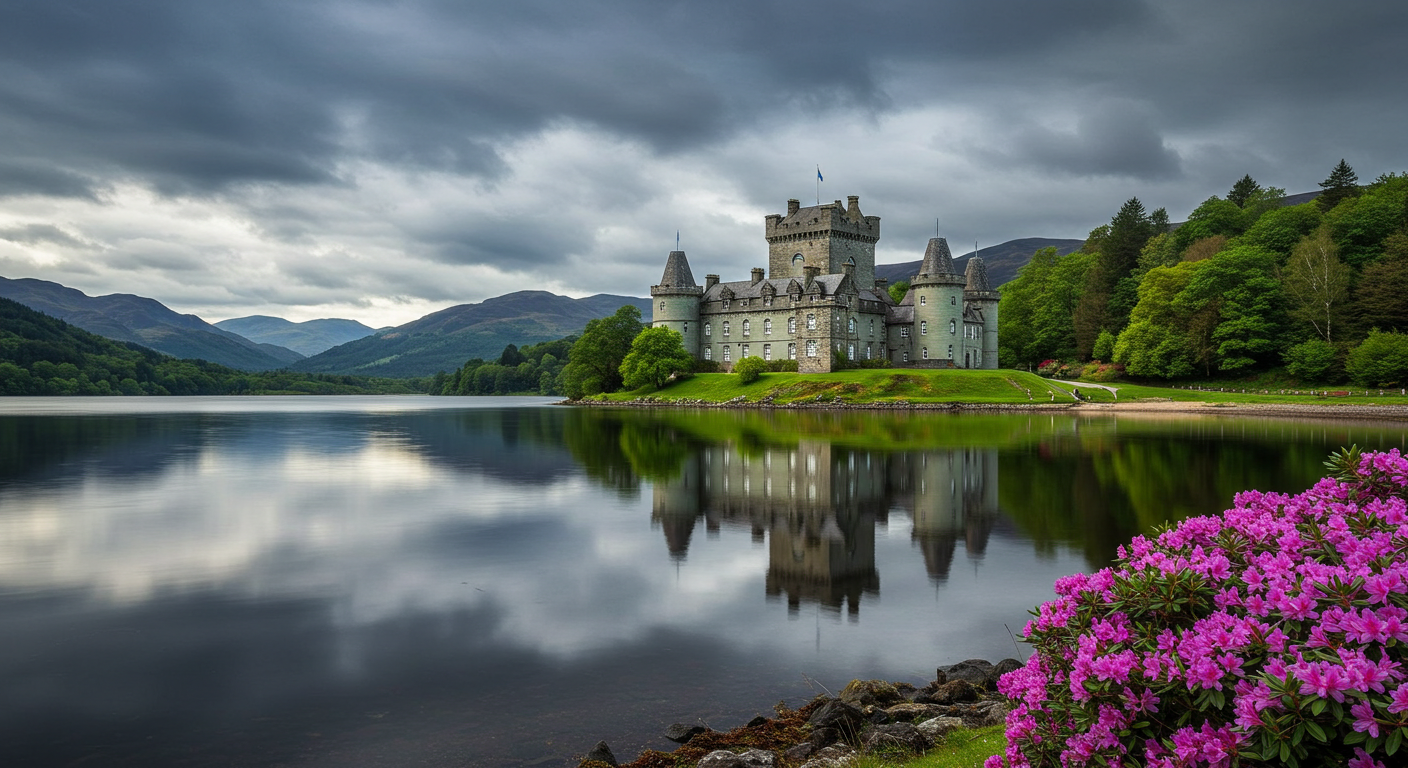
Argyll stretches along Scotland's western seaboard — a region of sea lochs, ancient history, and island gateways. It is where the Lowlands meet the Atlantic, and where Clan Campbell's power base at Inveraray has shaped the landscape for centuries. Glasgow is 60 miles east; the islands of Mull, Islay, Jura, and Colonsay lie offshore. Inveraray Castle is the region's centrepiece — the seat of Clan Campbell and home of the Duke of Argyll. On the shores of Loch Fyne, the castle featured as Downton Abbey's Duneagle Castle in the 2012 Christmas special. Open Thursday to Monday, 26 March to 30 September 2026 (then to 26 October), £16.20 adults. The town of Inveraray, with its whitewashed frontage and clock tower, is one of Scotland's most picturesque. Kilmartin Glen is one of Britain's richest prehistoric landscapes — over 350 ancient monuments within six miles, including standing stones, burial cairns, and rock carvings over 5,000 years old. Dunadd Fort, the coronation site of early Scottish kings, rises from the moors. Kilmartin Museum interprets the glen's extraordinary concentration of Neolithic and Bronze Age sites. The Crinan Canal is Britain's most beautiful shortcut — a nine-mile canal connecting Loch Fyne to the Atlantic, with towpath walks and boat trips. The Kintyre peninsula stretches south to the Mull of Kintyre, made famous by Paul McCartney's song — remote coastline and empty beaches. Argyll is the gateway to the islands. Mull, Islay, Jura, and Colonsay are reached by ferry from various ports — Oban for Mull, Kennacraig for Islay, Tayvallich and Lochgilphead for Jura. The Rest and Be Thankful pass on the A83 is one of Scotland's most dramatic mountain drives, connecting Glasgow to the region. Loch Fyne is famous for oysters and seafood — the loch-side restaurants are a highlight.
Speyside
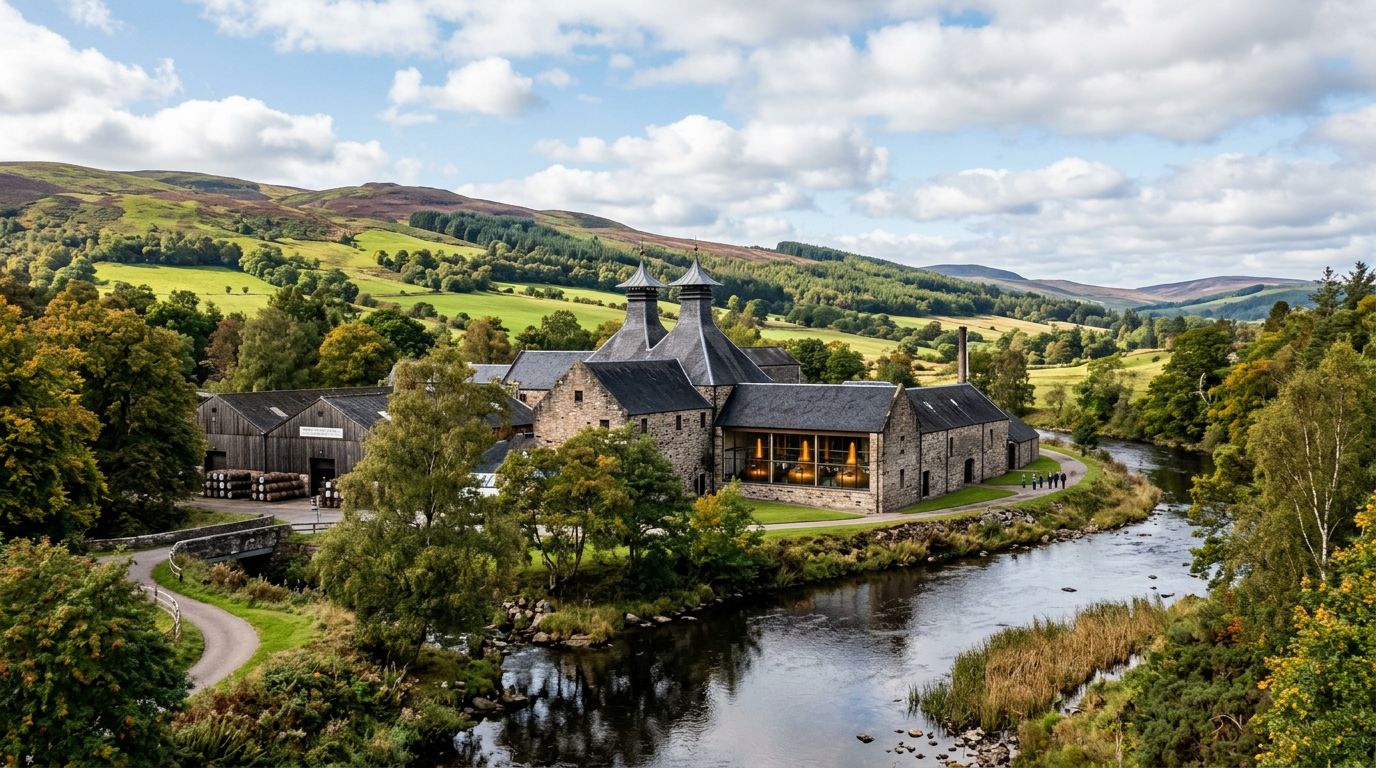
Speyside is the single most important whisky-producing region in Scotland, home to over half of the country's single malt distilleries. More than 50 distilleries cluster along the River Spey and its tributaries in the northeast of Scotland, between Inverness and Aberdeen. The names read like a whisky hall of fame: Glenfiddich, The Macallan, Glenlivet, Balvenie, Aberlour, Cardhu, and dozens more. The official Malt Whisky Trail is the world's first and only whisky trail — a signposted self-driving route connecting eight working distilleries and the Speyside Cooperage. The trail includes Glenfiddich, Cardhu, Glen Grant, The Glenlivet, Glen Moray, Strathisla, Benromach, and the historic Dallas Dhu, plus the Speyside Cooperage at Craigellachie where you can watch coopers crafting casks by hand. Dufftown is the unofficial capital — a town of fewer than 2,000 people with seven operating distilleries within its boundaries, earning the title Malt Whisky Capital of the World. Glenfiddich (producing whisky since 1887 and the world's best-selling single malt) and Balvenie are both on the edge of town. Aberlour and Craigellachie, nearby, offer excellent dining and accommodation alongside their distilleries. The Macallan Estate near Aberlour is architecturally stunning — its £140 million visitor centre, opened in 2018, features a grass-covered undulating roof designed to blend into the hillside. Tours range from the standard estate experience to premium single-cask tastings. The Spirit of Speyside Whisky Festival, held annually in late April/early May (29 April - 4 May 2026), features over 600 events across the region and is the largest whisky festival in Scotland. Speyside's appeal extends beyond whisky. The River Spey is one of Scotland's great salmon rivers, the surrounding countryside is beautiful, and the region sits between the Cairngorms National Park and the Moray coast.
Cairngorms
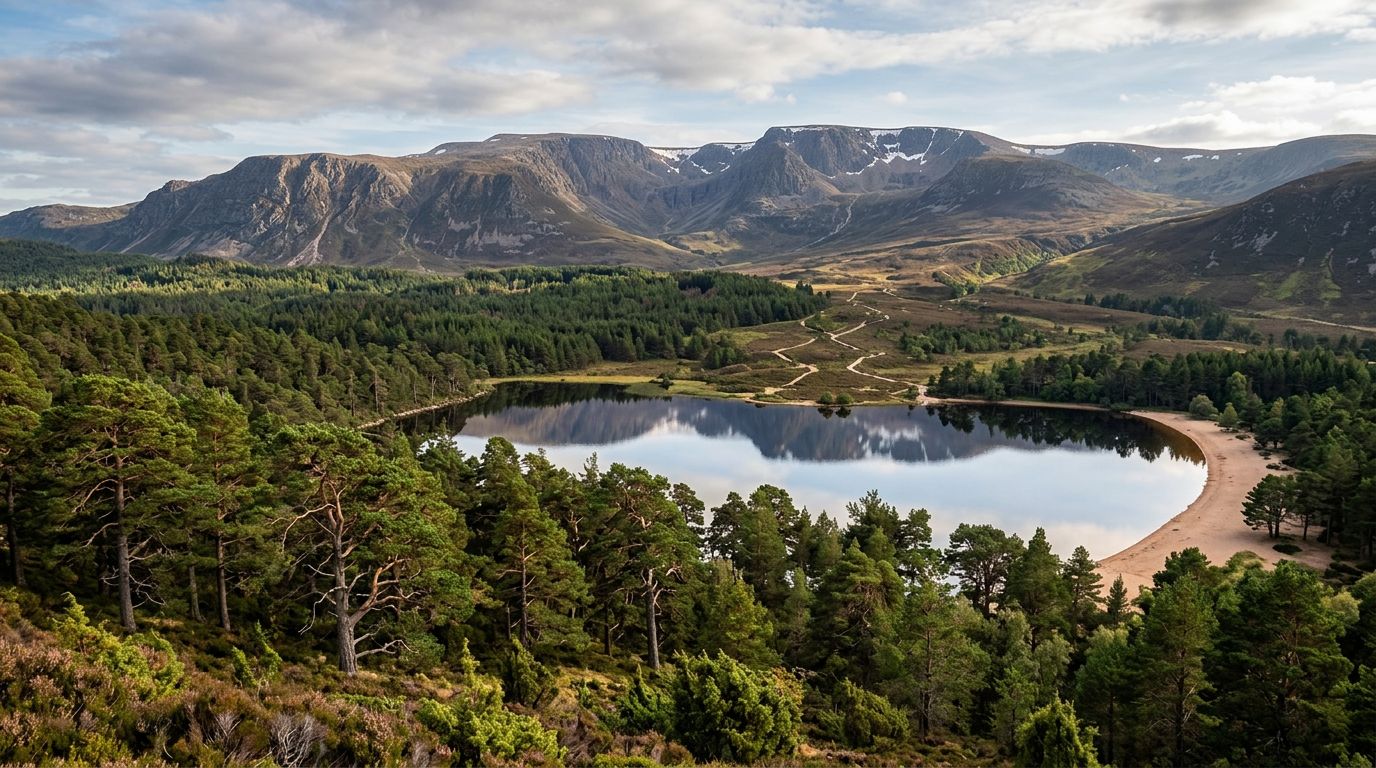
The Cairngorms National Park is the largest national park in the United Kingdom, covering 4,528 square kilometres (1,748 square miles) — roughly twice the size of the Lake District. Established in 2003, it encompasses the Cairngorm mountain range, Strathspey, upper Deeside, and surrounding areas across five council regions. Two million visitors come each year, yet the park never feels crowded — it is simply too vast. Aviemore is the park's main gateway town, directly on the Edinburgh-Inverness railway line with five or more daily trains. From Aviemore, you can reach the mountains, forests, and wildlife in minutes. The Cairngorm Mountain funicular railway, Scotland's only mountain railway, climbs from 635 metres to the Ptarmigan Top Station at 1,097 metres in under 10 minutes — the UK's highest restaurant sits at the summit with panoramic views across Strathspey. Wildlife is the Cairngorms' great draw. The park hosts one quarter of the UK's rare and endangered species. Red squirrels are abundant — spotted on roughly 90% of visits around Loch Morlich and Rothiemurchus. The Cairngorm Reindeer Herd is Britain's only free-ranging reindeer, seen on guided hill walks. Ospreys nest at Loch Garten each spring (RSPB viewing hide). Golden eagles, pine martens, red deer, crested tits, crossbills, and — for the very lucky — capercaillie all live here. The Highland Wildlife Park near Kincraig houses polar bears, Scottish wildcats, and snow leopards. The Strathspey Railway runs heritage steam and diesel services between Aviemore, Boat of Garten, and Broomhill — 10 miles of scenic railway through the park. Rothiemurchus Estate offers one of the finest remaining fragments of the ancient Caledonian pine forest, with walking, cycling, fishing, and wildlife watching. Loch Morlich, surrounded by forest and backed by mountains, is one of Scotland's most beautiful loch beaches. The park is also whisky country — Royal Lochnagar, Dalwhinnie, and Tomintoul distilleries all sit within its boundaries. Balmoral Castle, the Royal Family's Scottish residence, is on upper Deeside.
Fife
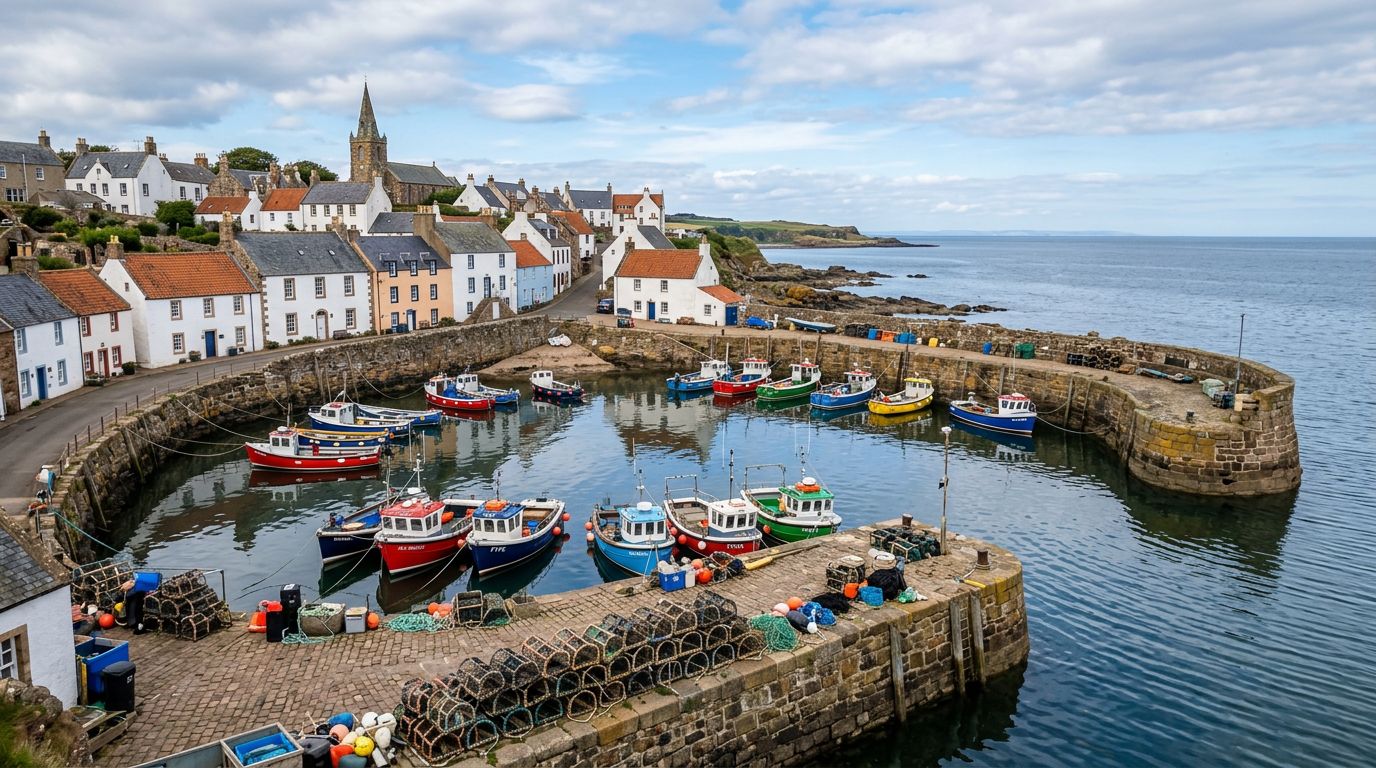
Fife is a peninsula on Scotland's east coast, jutting out between the Firths of Forth and Tay. Known as the Kingdom of Fife (it was an independent Pictish kingdom), it packs a remarkable variety into a compact area — medieval fishing villages, royal palaces, long sandy beaches, a 117-mile coastal path, and Scotland's newest city (Dunfermline) alongside its oldest university town (St Andrews). The East Neuk is Fife's crown jewel — a string of traditional fishing villages along the southeastern coast where time seems to have stopped. Crail has arguably the most photogenic harbour in Scotland. Anstruther is home to the legendary Anstruther Fish Bar (regularly voted Scotland's best). Pittenweem hosts an annual arts festival each August with artists exhibiting in homes, garages, and sheds. St Monans has the East Pier Smokehouse on the harbour and the Bowhouse food market nearby. The Fife Coastal Path runs 117 miles from Kincardine to Newburgh, connecting these villages and many more. The East Neuk section from Crail to Elie is the most popular stretch — walkable in a day, with harbours, beaches, and fish and chips along the way. Falkland Palace, inland, is a Renaissance royal retreat built by James IV and James V in the 16th century. Its real tennis court (1539) is the oldest in Britain still in use. The village of Falkland, beneath the Lomond Hills, is charming in its own right. Fife's western edge includes Culross — Scotland's best-preserved 17th-century village, used as a filming location for Outlander — and the medieval royal capital of Dunfermline with its abbey and palace. The Forth bridges (Road Bridge, Rail Bridge, and Queensferry Crossing) frame the western approach.
Angus
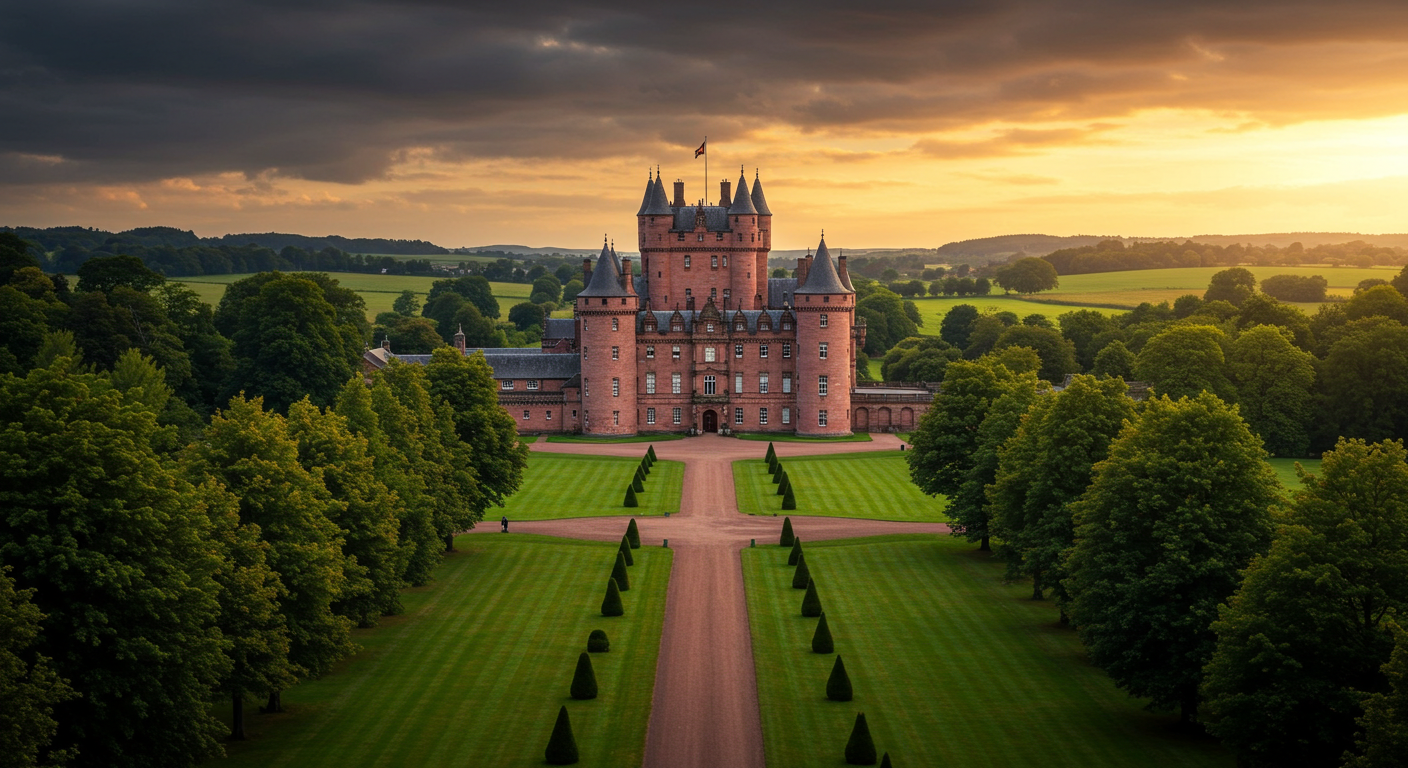
Angus stretches along Scotland's east coast between Dundee and Aberdeen — a region of royal history, dramatic coastline, and Highland gateway glens. It is Scotland's Birthplace — the Declaration of Arbroath, asserting Scottish independence, was signed at Arbroath Abbey on 6 April 1320. Arbroath Abbey, founded in 1178 by William the Lion, stands in red sandstone ruins on the coast. The Abbot's House is one of the most complete in Britain. The famous Round O — a circular window — became a landmark for mariners. Glamis Castle, 12 miles north, is a 15th-century fortress and the childhood home of Queen Elizabeth The Queen Mother. Shakespeare's Macbeth is set here. Royal connections, the Italian Garden, walled garden, and nature trail reward a full day. The Behind the Seams exhibition runs March to October 2026. The Angus Glens — five distinct valleys from the coast to the Cairngorms — offer waymarked trails, lochs, and wildlife. Glen Clova, Glen Prosen, Glen Isla, Glen Esk, and Glen Lethnot each have their own character. The Arbroath red sandstone cliffs offer sea stacks, natural arches, and a coastal trail with seabird colonies. Carnoustie Championship Golf Course has hosted The Open; 30 courses line the Angus coast. Kirriemuir, inland, is the birthplace of JM Barrie, creator of Peter Pan. Angus is 20 minutes from Dundee.
Perthshire
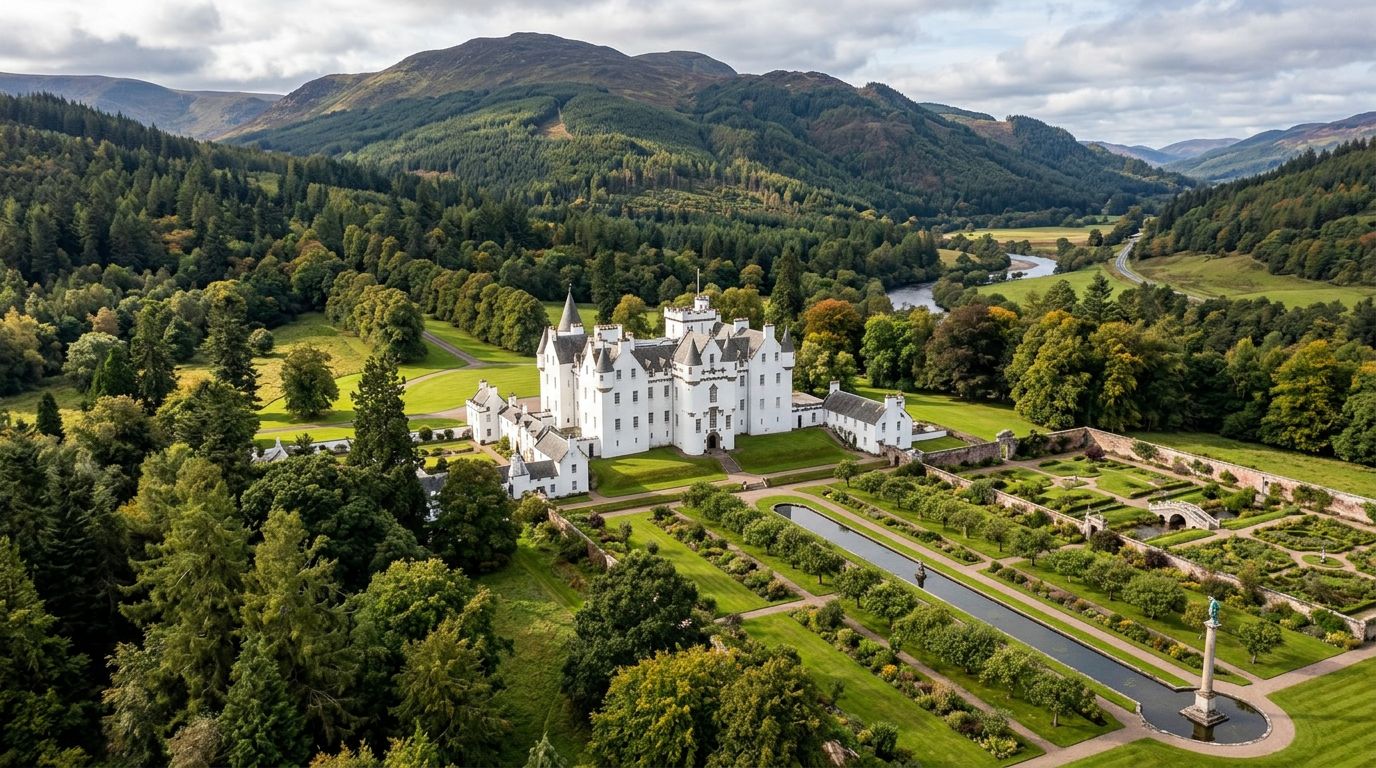
Perthshire sits at the geographic heart of Scotland, earning its title as the Gateway to the Highlands. The A9, Scotland's main north-south artery, runs through the region, making it a natural stopping point between Edinburgh (90 minutes south) and Inverness (90 minutes north). But Perthshire deserves far more than a stop — it is one of Scotland's most varied and beautiful regions. Pitlochry is the region's Victorian jewel — a small town set in the Tummel Valley with a remarkable concentration of attractions. The Pitlochry Dam and salmon ladder let you watch Atlantic salmon leaping upstream (best in autumn). Blair Athol Distillery offers tours year-round. Edradour, 10 minutes east, is Scotland's smallest traditional distillery, still using hand-operated equipment. The Enchanted Forest, an award-winning light and sound show in Faskally Wood each autumn, draws visitors from across Scotland. Blair Castle, north of Pitlochry, is the seat of the Duke of Atholl and home to the only legal private army in Europe — the Atholl Highlanders. The white, turreted castle contains 30 rooms spanning 700 years of history, plus a nine-acre walled Hercules Garden. Open April to October 2026. The Hermitage, near Dunkeld, is a National Trust for Scotland woodland walk to Ossian's Hall — a folly overlooking the Black Linn Falls on the River Braan. The surrounding Douglas fir trees include Britain's tallest tree (66.4 metres). Dunkeld itself is a charming cathedral town. Queen's View at Loch Tummel offers one of Scotland's most famous panoramas — the view down the loch to the cone of Schiehallion. Loch Tay stretches 14 miles from Kenmore to Killin, where the Falls of Dochart rush through the village centre. The Scottish Crannog Centre at Kenmore recreates an Iron Age loch dwelling.
The Trossachs
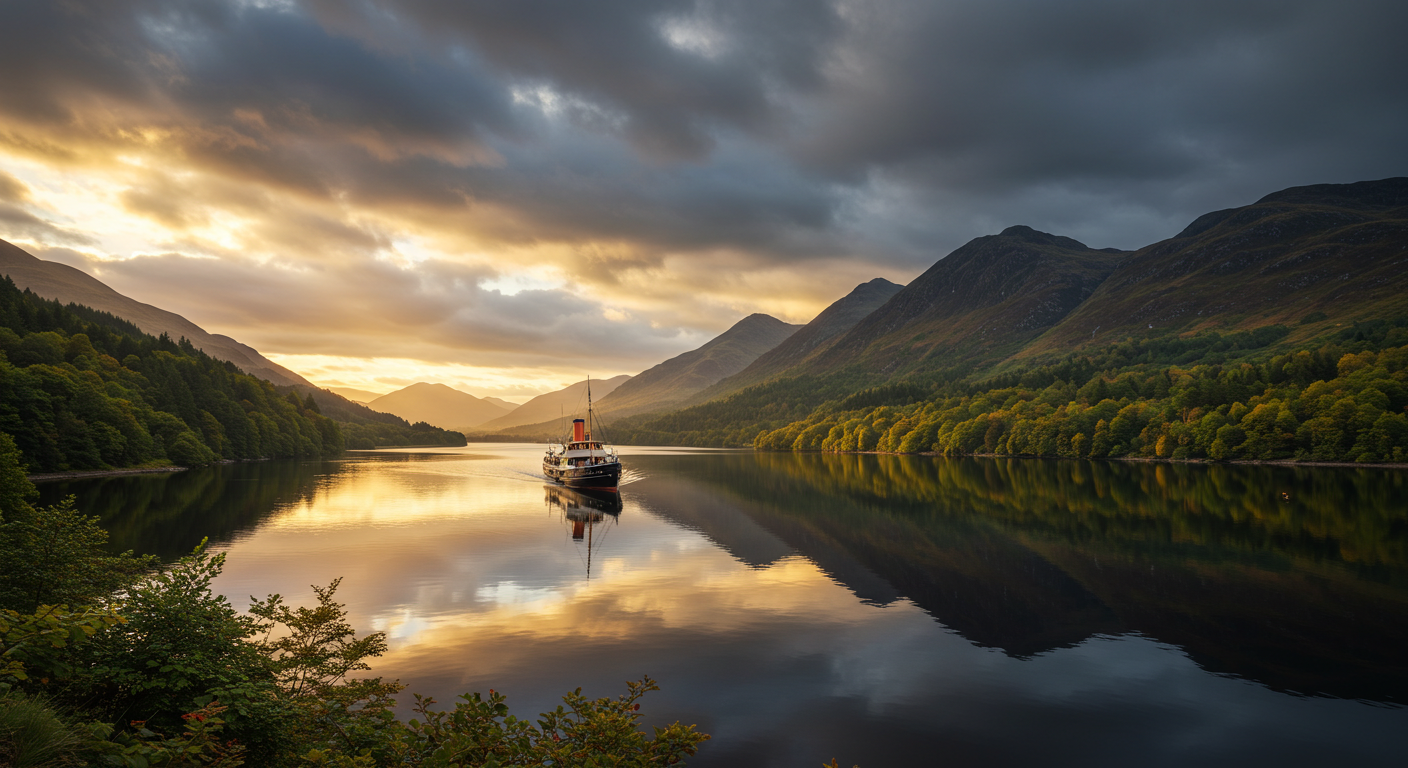
The Trossachs, part of Loch Lomond & The Trossachs National Park, is where Scottish tourism began. Sir Walter Scott's 1810 poem The Lady of the Lake, set on Loch Katrine, sparked a Victorian tourism boom — readers flocked to see the landscape that had inspired the verse. Queen Victoria visited Loch Katrine in 1859 and 1869, cementing the region's reputation as Highlands in Miniature. Loch Katrine is the centrepiece — a freshwater loch stretching 13 kilometres through Queen Elizabeth Forest Park. The steamship Sir Walter Scott, built in 1899, is now in its 126th season (2026). Daily cruises run from Trossachs Pier to Stronachlachar, operated by a charitable trust. The original 1899 engine still runs. Rob Roy MacGregor was born at Glengyle at the western end of Loch Katrine. Scott's novel Rob Roy (1817) immortalised the outlaw, and the landscape remains unchanged. The Great Trossachs Forest is a 16,500-hectare native tree regeneration project, designated a National Nature Reserve since 2015. A 21-kilometre walking and cycling path links Trossachs Pier to Stronachlachar — bike hire at the pier. The A821 scenic road connects Aberfoyle to Callander via Loch Katrine, one of Scotland's great drives. Aberfoyle is the gateway village; the Trossachs Explore bus service runs from 29 June 2026. The Trossachs is one hour from Glasgow and Edinburgh — one of Scotland's most accessible Highland experiences.
Outer Hebrides
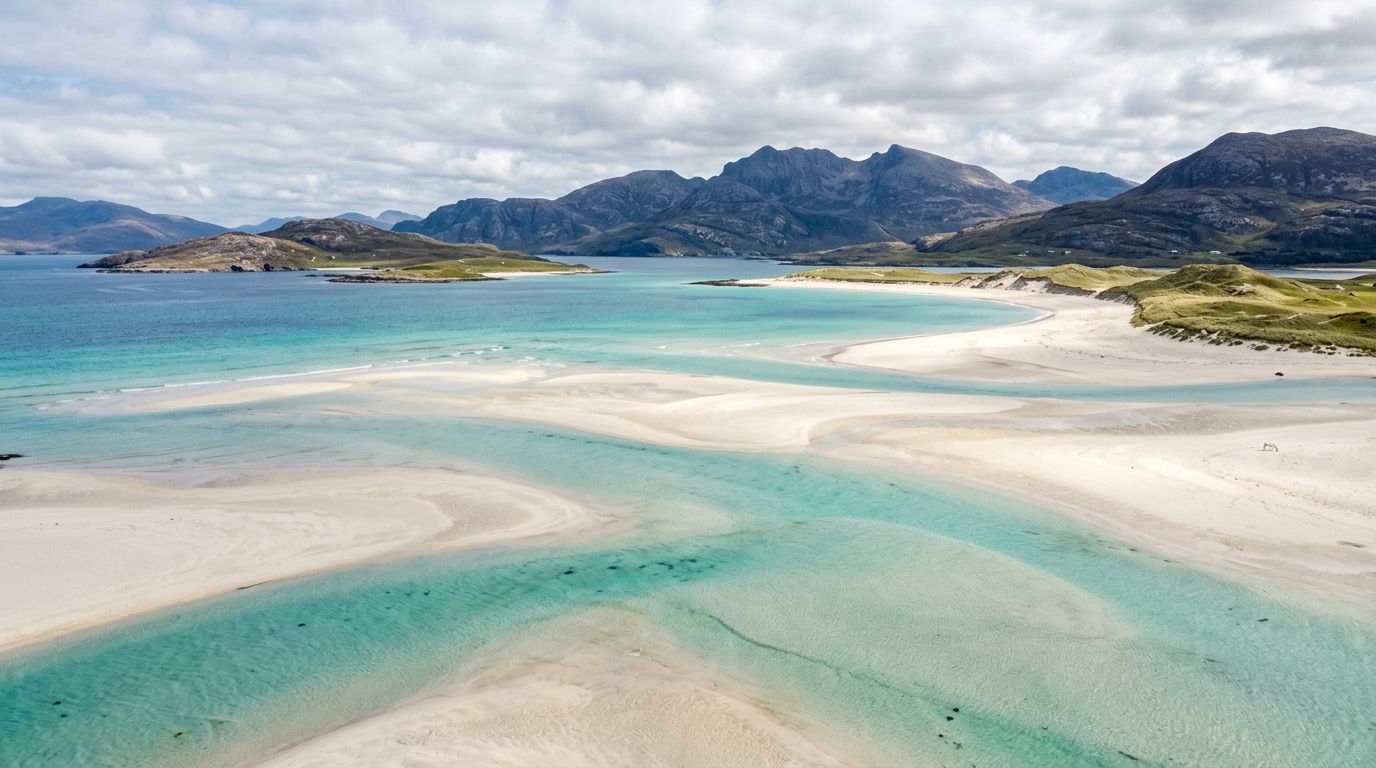
The Outer Hebrides (Na h-Eileanan Siar) are a 130-mile chain of islands off Scotland's northwest coast, stretching from the Butt of Lewis in the north to Barra in the south. This is the Gaelic heartland of Scotland — road signs are in Gaelic first, the Sabbath is still observed on Lewis (most businesses close on Sunday), and the pace of life moves with the tides and weather rather than a clock. Lewis and Harris are a single landmass — the largest island in the Outer Hebrides — divided by a range of hills and centuries of distinct identity. Lewis in the north is low, peaty moorland with the islands' one town, Stornoway, and the great prehistoric sites. Harris in the south is mountainous and indented, with beaches on its west coast that have been ranked among the finest in the world. The Calanais Standing Stones on the west coast of Lewis are a Neolithic monument dating to approximately 2900-2600 BC, built from ancient Lewisian Gneiss — among the oldest exposed rocks on Earth. A newly redeveloped visitor centre opened in 2026 with a state-of-the-art exhibition, cafe, and gift shop. The stones are free to access year-round. Harris's west coast beaches are the reason many visitors come. Luskentyre is the most famous — a vast sweep of white shell sand and turquoise water backed by mountains, regularly ranked among the world's best beaches. Seilebost faces it across the bay and is nearly as stunning. Scarista, further south, is a quieter classic. The water is genuinely cold even in August — bring a wetsuit for more than paddling. Harris Tweed is the only fabric in the world protected by an Act of Parliament. It must be hand-woven at the weaver's home in the Outer Hebrides from yarn dyed and spun in the islands. Visitors can meet weavers, see the looms, and buy directly. The industry supports hundreds of island families.
Let's start dreaming —
Ready to Explore Scotland?
Let our Scotland experts help you plan the perfect trip. We'll create a customized itinerary featuring castles, whisky distilleries, dramatic landscapes, and more.