The Celtic Loop: Combining Ireland and Scotland into One Seamless Vacation Package

The transition between the soft, moss-blanketed oak woods of Killarney and the raw, jagged basalt of the Scottish Highlands should feel like a natural movement in a piece of music. It is a shift from the deep, rain-washed greens of the island of Ireland to the moody, purple-tinted heather of the Caledonian wilderness. When you stand on the platform at a quiet highland station or look out across a sea loch as the afternoon gale settles, you realize that these two landscapes share an ancient, broken spine. For the traveler who refuses to choose between the high crosses of the West and the lonely clansman keeps of the North, combining both nations into a single, comprehensive journey is the ultimate tribute to the Celtic world. Yet, the physical space between a castle stay in County Clare and a sporting estate in Perthshire is frequently filled with an invisible, exhausting friction. The true luxury of a combined vacation package is not merely the properties you visit; it is the absolute erasure of the administrative noise that normally pollutes the space between two countries.
In the upper echelons of international travel, the desire for multi-country itineraries has grown exponentially. Travelers originating from the United States, Canada, and Australia naturally want to maximize their time across the Atlantic by exploring the full breadth of their ancestral or cultural interests. However, attempting to link these two distinct regions within a single, cohesive timeline presents a unique set of operational hurdles. When we design integrated ireland scotland vacation packages, our objective is to ensure that the crossing of the Irish Sea feels as effortless as walking from the drawing room to the library, preserving your mental energy for the landscapes that matter.
"People treat the water between Ireland and Scotland like a minor detail on a map, but logistically, it’s a chasm. The travelers who try to piece it together themselves spend half their vacation sitting on luggage at regional terminals, dealing with independent car rental return penalties, and wondering why their schedules don't align. The ones who let us architect the transition simply watch the coastlines merge from a private cabin." — Alasdair MacLeod, Master Chauffeur & Route Coordinator, Edinburgh
The Logistical Friction of the Multi-Country Itinerary

The primary illusion of the modern travel app is that distance is linear. On a screen, a hop from Dublin to Edinburgh appears no more complicated than a short domestic flight from New York to Boston. In reality, connecting a premium road trip on the Wild Atlantic Way with a driving loop through the Isle of Skye is a complex exercise in multi-jurisdictional timing. You are dealing with two separate transport infrastructures, two distinct currencies, differing driving regulations, and independent vehicle rental networks.
The most common point of failure for independent travelers is the car rental transition. If you rent a premium vehicle in Ireland, you cannot simply drive it onto a ferry and leave it at an airport in Scotland. The maritime insurance regulations and border-crossing penalties are prohibitive, often resulting in massive drop-off fees that can exceed €1,500 for a single vehicle. This means that a combined trip requires a total operational reset at the border—a mid-point handoff that must be executed with absolute precision to avoid wasting a full calendar day of your vacation.
- The Border Vehicle Reset: A premium itinerary structures two separate luxury vehicle placements, ensuring a fresh, fully vetted car is waiting at your arrival port or runway without a minute of downtime.
- The Airport Terminal Scramble: Avoiding the chaos of commercial regional flights by coordinating private transfers, fast-track security clearances, and luggage porterage that bypasses the public check-in queues.
- Currency and Compliance Synchronization: Managing the smooth transition between the Euro (€) zone of the Republic and the British Pound (£) of Northern Ireland and Scotland without requiring constant financial adjustments.
Designing the Perfect Twin-Nation Narrative

A common mistake in combining these two nations is the tendency to rush the pace. Ireland and Scotland each possess a driving geography that defies standard speed calculations. A distance of 100km through the winding coastal routes of Donegal or the single-track roads of the Northwest Highlands can easily require 3 hours of concentrated navigation. If an itinerary attempts to cover Dublin, Kerry, Edinburgh, and Inverness in a standard 10-day window, the vacation quickly transforms into a grueling endurance test spent entirely behind a steering wheel.
To prevent burnout, a luxury package utilizes a "hub-and-spoke" philosophy within each country. Instead of changing hotels every night, you spend 3 nights at an anchor property like Ashford Castle in the west of Ireland before transferring seamlessly to a property like The Gleneagles Hotel in Perthshire. This approach cuts your packing and unpacking transitions in half, allowing you to settle deeply into the local atmosphere, book multi-day fishing or stalking guides, and experience the properties at a restorative pace.
Navigating the Single-Track Roads of the Scottish Highlands

For the traveler who chooses the curated self-drive path, transitioning from the regional roads of Ireland to the mountain passes of Scotland introduces a new driving vocabulary. While both countries drive on the left side of the road, the architectural challenges of the terrain differ significantly. In Ireland, the primary obstacles are the high, ancient hedgerows and stone walls that flank roads measuring just 1.8m in width. In the Scottish Highlands, the challenge shifts to the high-mountain single-track passes, such as the famous Bealach na Bà to Applecross.
These roads require a sophisticated understanding of "passing places"—designated turnouts that dictate the rhythm of rural traffic. Navigating an 11% gradient on a single-track ledge requires confidence, patience, and a vehicle equipped with advanced torque distribution and automatic transmission. Through our specialized fleet partnerships, including the direct security of premium vehicles through operators like My Irish Cousin on the western side of the sea, we ensure that your vehicle transition is completely uniform. You step out of a top-tier SUV in Dublin and into an identical, premium automatic model upon landing in Edinburgh, eliminating any learning curve with the dashboard mechanics.
- Passing Place Etiquette: Understanding when to hold your ground on the left and when to pause to allow oncoming agricultural or local traffic to proceed through mountain glens.
- The Visibility Factor: Managing the sudden shifts in visibility caused by sea mists (the haar) rolling off the North Sea or the North Channel, which can drop sightlines down to 20m within seconds.
- The Gradient Challenge: Ensuring your vehicle possesses the ground clearance and braking capacity to manage sustained down-hill descents on alpine-style switchbacks.
The Maritime Connection: Scenic Crossings vs. Air Logistics

There are two primary methodologies for executing the crossing between the islands: the high-speed maritime route or the executive air bridge. For itineraries that focus on the northern geographies—linking the historic sites of Belfast and the Causeway Coast with the southwestern coast of Scotland—the ferry crossing across the North Channel provides a spectacular, old-world transition. Traveling in the premium lounge of a high-speed vessel allows you to watch the green cliffs of Antrim fade away while the dramatic outline of the Mull of Kintyre rises ahead.
For itineraries that connect more distant points—such as a golf-focused journey linking the links of Southwest Ireland directly with the championship courses of St Andrews—the maritime crossing is replaced by an optimized air connection. This transition is built entirely around convenience. Your private driver or concierge drops you directly at the executive aviation terminal at Dublin Airport, your luggage is handled by dedicated porters, and within 60 minutes of takeoff, you are stepping onto the tarmac in Edinburgh or Aberdeen, where your secondary vehicle is already running, the climate control adjusted to your exact preference.
Threading the dramatic sea-lochs of the Scottish Highlands with the rugged seaboard of the west of Ireland requires absolute structural synchronization. Before you piece together a multi-country legacy holiday, it is vital to understand the foundational logistics of an optimized Irish landing by reviewing our pillar resource on curated Ireland Vacation Packages.
Erasing the Friction of Two Distinct Worlds

The architectural dream of the great Celtic loop is easily undermined by the friction of fragmented planning. If you attempt to construct an integrated Ireland and Scotland trip on your own, you will spend an estimated 60 to 80 hours managing independent booking engines, trying to align ferry timetables that shift based on Atlantic weather, and attempting to coordinate separate car rental contracts that leave you exposed to massive liability loopholes. You will find yourself standing in line at a rental counter in Edinburgh after a long day of travel, re-submitting your credentials, and discovering that the "luxury vehicle" you reserved has been substituted for a manual sedan that cannot fit your family's luggage.
You will have to navigate the complex realities of local driving laws independently—from the strict 50mg/100ml blood alcohol limits in Ireland to the even more severe 22mg/100ml limit in Scotland, where a single sip of a single malt at a distillery tour means you cannot legally touch the steering wheel for the remainder of the day. You will face the physical and mental exhaustion of moving heavy bags between remote properties, navigating unfamiliar roundabouts in the rain while jet-lagged, and missing the historical landmarks that require local access codes or private land permissions.
This logistical vulnerability is precisely why the Celtic Vacations multi-country framework is indispensable. We take the fragmented pieces of an multi-destination itinerary and fuse them into a single, seamless contract. We handle the vehicle handoffs on both sides of the water, ensuring that your premium cars are fully insured with zero-deductible coverage. We align every regional flight, private maritime cabin, luxury suite, and distillery tasting into a unified flow. You retain the absolute independence of exploring the castles, glens, and coastlines of both nations at your own pace, while we shoulder the entire administrative burden of the border crossing.
Explore Celtic Vacations Luxury Vacation Packages →
Strategic Route Alignment for the Celtic Loop

An optimized multi-country itinerary requires a logical geographical progression to minimize dead-end driving and maximize time spent on the ground. The comparison matrix below details the two primary luxury route configurations for linking Ireland and Scotland seamlessly:
| Itinerary Configuration | Best Suited For | Key Transitional Hubs | Primary Inclusions |
|---|---|---|---|
| The Northern Maritime Loop | Travelers focused on raw scenery, coastal heritage, and ancestral history. | Dublin → Belfast → Cairnryan Ferry → Ayr → Edinburgh | 5-star castle stays, private tours of the Antrim Coast, and entry into the historic estates of the Scottish Borders. |
| The Championship Air Bridge | Golf enthusiasts and those seeking maximum geographical reach in minimum time. | Shannon Airport → Dublin Executive Aviation → Edinburgh Airport → St Andrews | Guaranteed tee times at Ballybunion and Old Head, private air transfer, and luxury lodging at the Old Course Hotel. |
Related Articles

The Urban Dram: Designing the Perfect Dublin Whiskey Tours Itinerary
Design the ultimate luxury Dublin whiskey tours itinerary. Explore the historic Liberties, private tastings, and historic pub snugs without city stress.

The Midleton Distillery Tour: Unlocking Cork's Ultimate Whiskey Shrine
Master the ultimate Midleton distillery tour in Cork. Experience private tastings, luxury castle resort stays, and hassle-free private chauffeur transport.

Spirits of the North Coast: The Discerning Traveler's Guide to the Bushmills Distillery Tour
Master the ultimate Bushmills distillery tour. Experience private tastings, luxury Antrim coast accommodation, and stress-free Northern Ireland logistics.
Explore Our Tour Packages

10-Night Ireland Ancestry
A 10-night tour uncovering Ireland’s ancestral stories.
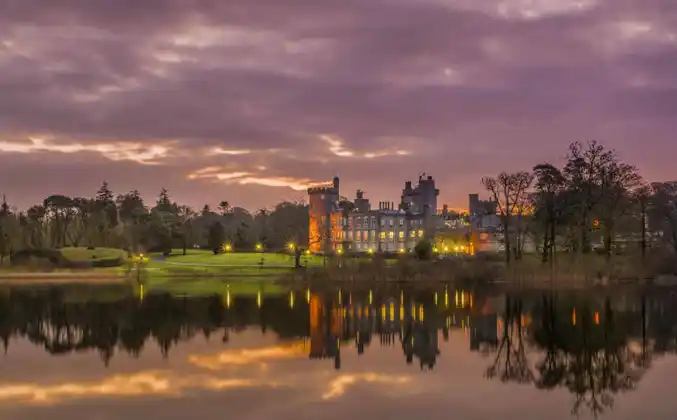
7-Night Irish Castles & Manor's
Experience a 7-night luxury journey through Ireland, staying in some of its most exclusive castle and manors
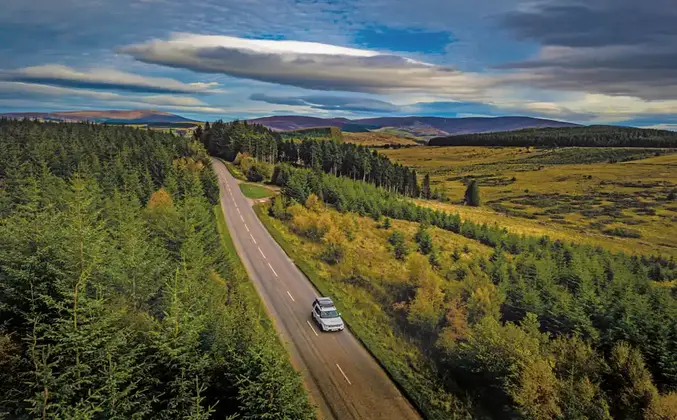
10-Night Legendary Scotland
A private 10-night Land Rover Discovery tour of Scotland for up to 4 guests.